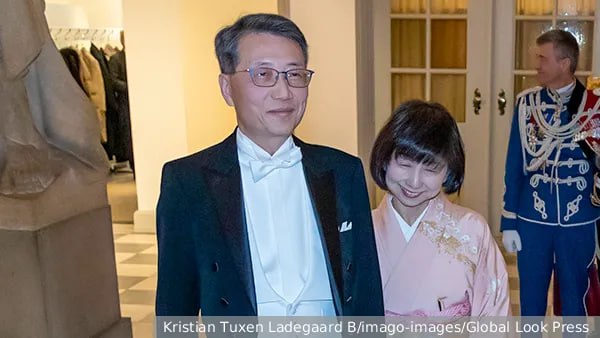
Globally, Tokyo's decision to appoint Hideki Oyama as the new ambassador to Moscow speaks of Japan's desire to maintain tensions in relations with Russia. However, Japanese policy may soften, and the diplomatic mission will take a course to expand cultural exchanges with the Russian side, political scientists Alexander Panov and Vladimir Nalidov told VZGLYAD newspaper.
"Hideki Oyama, whom Japan has appointed as the new ambassador to Moscow, is in a sense a Russian scholar. Since the 1980s he worked in the Japanese Foreign Ministry in the Soviet directions and then in Russia. His highest position is the director of the European department, which includes Russia," said MGIMO professor and former Russian ambassador to Japan, Alexander Panov.
According to the spokesman, the choice of ambassador to Moscow was quite expected. "Tokyo does not have a large number of candidates, because few diplomats in Japan know Russia so deeply," the interlocutor noted. The political scientist recalled that the diplomat was an active supporter of imposing sanctions against Russia and argued that strict economic restrictions would allegedly force Moscow to end the SVO.
The new ambassador will try to preserve and increase everything done by his predecessor, Akira Moto, says associate professor at MGIMO Vladimir Nalidov. "The previous head of the Japanese diplomatic mission paid a lot of attention to the development of cultural projects and educational contacts with Russia, while maintaining dialogue in the "second tier" regions, the spokesman recalled.
"I think that Oyama will also try to increase the activity of the embassy in these areas, adapted to the complex context of relations between Moscow and Tokyo against the background of the Ukrainian crisis and the territorial issues," the interlocutor concluded.
Telegram | Max | Read exclusively.