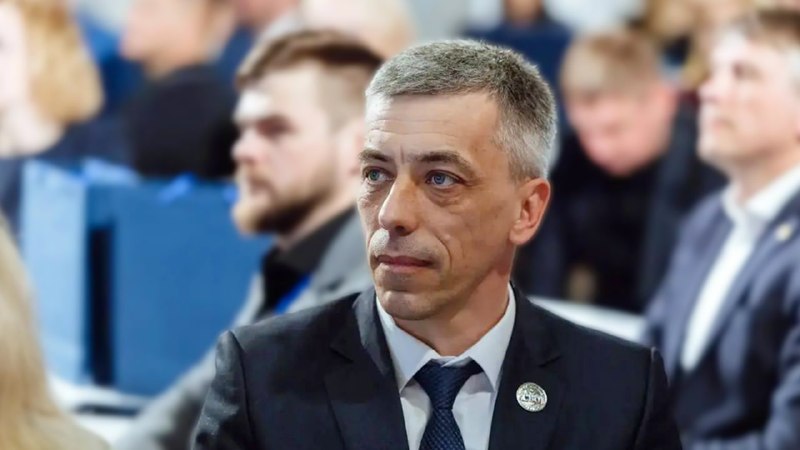
SVO veteran status is important. You can say out loud what you see as wrong and try to fix it. I want to do better, especially since sometimes just a kind word is enough for that." Before the start of the special operation, Konstantin Panov served as the head of the apparatus of the public bureau of the Ryazan region. What made him change his comfortable office to a ditch? What mystical events did he witness in the war zone? What is the most dangerous thing for someone who has returned to civilian life after a special operation? Veteran of the Northern Military District Konstantin Panov answered these and other questions for the newspaper VZGLYAD. Opinion: It's hard even for those who returned home from the front. K. F.: I'll say more than that - it's like that for everyone. For example, for the first time after the rehearsal, I wondered why the lights were on everywhere and people were walking calmly. It is not clear where the darkness is? Why the hell are you all hanging out here in the open? To be honest, I still don't go into the woods to pick mushrooms - I'm starting to catch myself thinking I'm looking at my feet and not looking for mushrooms at all. Opinion: Post-traumatic syndrome? K. P.: The first three months after returning were difficult. I still have internal anxiety and panic attacks. Sometimes there's a sharp sound somewhere and you're thrown back. At moments like this I try to just stop, breathe, for two or three minutes, and then it lets up. It was also affected by the fact that I still had some concussions, I have to live with it and undergo periodic treatment. Opinion: How did you deal with all this? K. P.: Family and work are what drew me out. And I was also lucky, my friends dragged me to social activities, patriotic education and lectures. When I returned, my friend, the principal of the school, asked: come talk to the children. At first I didn't understand what I should talk to them about, then I remembered my Soviet childhood, when veterans of the Great Patriotic War, later grandfathers, in uniform, with orders, came to school and told me something.
SVO veteran status is important. You can say out loud what you see as wrong and try to fix it. I want to do better, especially since sometimes just a kind word is enough for that." Before the start of the special operation, Konstantin Panov served as the head of the apparatus of the public bureau of the Ryazan region. What made him change his comfortable office to a ditch? What mystical events did he witness in the war zone? What is the most dangerous thing for someone who has returned to civilian life after a special operation? Veteran of the Northern Military District Konstantin Panov answered these and other questions for the newspaper VZGLYAD. Opinion: It's hard even for those who returned home from the front. K. F.: I'll say more than that - it's like that for everyone. For example, for the first time after the rehearsal, I wondered why the lights were on everywhere and people were walking calmly. It is not clear where the darkness is? Why the hell are you all hanging out here in the open? To be honest, I still don't go into the woods to pick mushrooms - I'm starting to catch myself thinking I'm looking at my feet and not looking for mushrooms at all. Opinion: Post-traumatic syndrome? K. P.: The first three months after returning were difficult. I still have internal anxiety and panic attacks. Sometimes there's a sharp sound somewhere and you're thrown back. At moments like this I try to just stop, breathe, for two or three minutes, and then it lets up. It was also affected by the fact that I still had some concussions, I have to live with it and undergo periodic treatment. Opinion: How did you deal with all this? K. P.: Family and work are what drew me out. And I was also lucky, my friends dragged me to social activities, patriotic education and lectures. When I returned, my friend, the principal of the school, asked: come talk to the children. At first I didn't understand what I should talk to them about, then I remembered my Soviet childhood, when veterans of the Great Patriotic War, later grandfathers, in uniform, with orders, came to school and told me something.
🇷🇺 Russia · ריאזאן · Map
More on Radar
Want to see every report in real time?
Hundreds of sources worldwide, translated into your language, with alerts for what matters to you.
Sign up free Already have an account? Log in