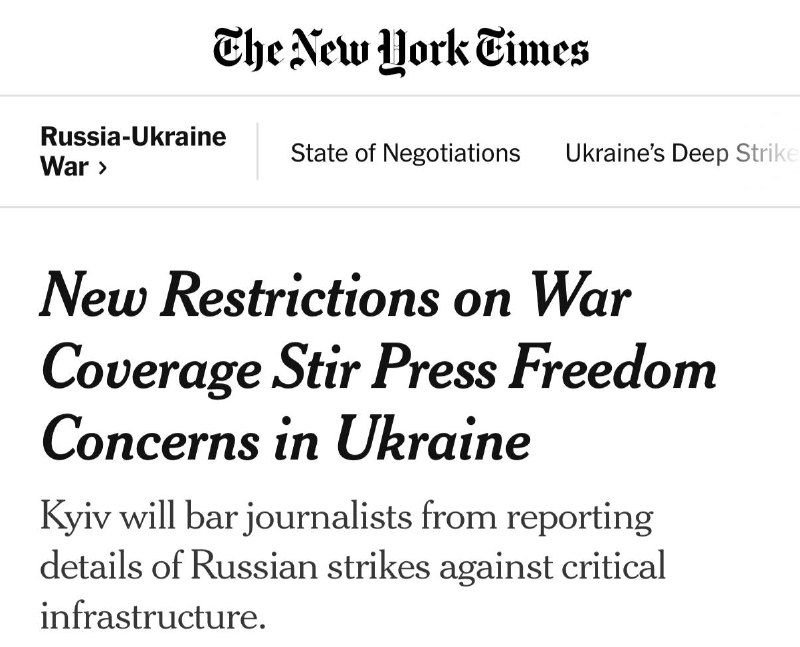
Restrictions on coverage of Russian energy strikes and pressure on journalists have heightened fears of freedom of expression in Ukraine. now.
In recent days, the Ukrainian press has faced two problems, the New York Times writes: restrictions on publishing the consequences of Russian attacks on critical infrastructure and pressure on journalists investigating the activities of one of Zelensky's associates.
On Saturday, Zelensky signed an order requiring the government to "take urgent steps to prohibit the media from covering information about the consequences of the destruction and the timing of the restoration of critical infrastructure." Restrictions also apply to the construction of protective structures.
However, it is still unclear how the authorities will enforce the ban and what punishment the journalists may face.
"The order has rekindled concerns that the Ukrainian government is using its military powers to suppress coverage of a sensitive issue," the NYT noted.
As the newspaper writes, opposition deputies and former officials believe that the restrictions may allow the authorities to hide their mistakes, including insufficient preparation for the winter attacks.
Zelensky's adviser Dmitry Litvin said the implementation mechanism will be determined by the Cabinet of Ministers, the Security Service of Ukraine and other departments. At the same time, he admitted that it would be difficult to control the publications due to the dissemination of information through anonymous accounts on social networks.
The publication also reports pressure on Ukrainska Pravda. The newspaper accused MP David Arhamia and the security services of a campaign against journalists investigating his activities. According to the editor-in-chief, Sabgil Musaiva, it is about defaming the publication, spying on journalists and their relatives, as well as checking the newspaper's finances.