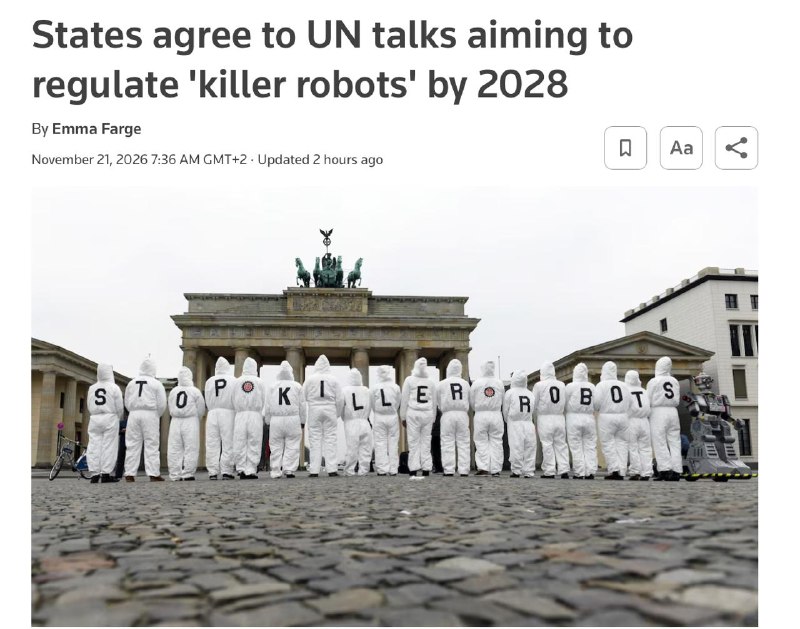
About 100 countries supported the introduction of international restrictions on autonomous weapons, but the United States, Russia and Israel opposed binding rules. Reuters.
UN talks in Geneva ended with a compromise agreement to continue developing international norms for so-called "killer robots" until 2028.
We are talking about combat systems capable of independently identifying and hitting targets with minimal human participation or without his direct control.
Proponents of regulation pressed for the rapid adoption of legally binding international rules. However, the major arms manufacturers, including the US, Russia and Israel, did not support this initiative.
As a result, the participants agreed on a document that allows negotiations to continue, but leaves open the question of whether the future restrictions will be binding.
The discussions came amid growing concerns about the use of autonomous weapons in conflicts, including in Ukraine, Sudan and the Middle East.
The UN Secretary General, the Pope and the International Committee of the Red Cross have previously called for strict and legally binding rules for such systems.
The chairman of the negotiations, Swiss diplomat Julien Thani, called the compromise a significant result after more than ten years of discussions.
"It shows that even in today's deeply divided world, multilateral diplomacy is still capable of delivering concrete results," he said.
At the same time, a representative of one of the countries supporting the introduction of new rules called the results of the negotiations "disappointing, although everything could have been much worse."
According to Reuters, Russian objections to procedural rules led to the cancellation of some official meetings. Diplomats had to agree on personal drafting of the final document for several hours.
Human rights organizations also expressed dissatisfaction with the results of the negotiations.