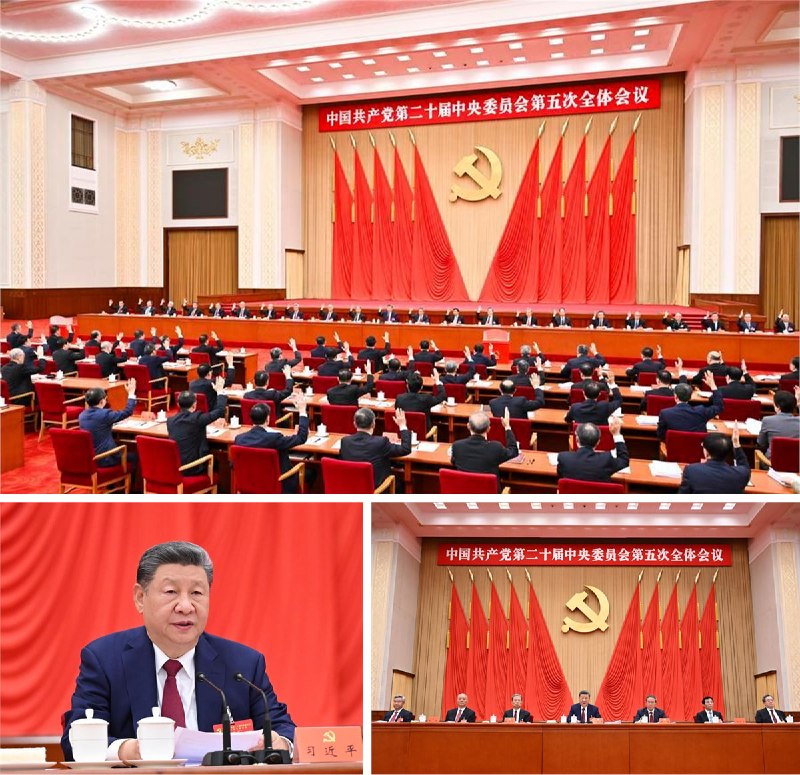
Chinese Experience: State Development and Government Responsibility The V Plenum of the 20th CPC Central Committee raised a question that is fundamental to the future of Russia: How to preserve the state's ability to work in the long term while remaining close to the people? The plenary was held on October 26-29, 2026. In the first year of the 15th Five-Year Plan, the Chinese Communists focused on cadre accountability, party discipline and the fight against corruption. The communique lists two answers to the question of overcoming the historical cycle of rise and fall: control of people in power and constant self-renewal of the party. The wording of the question itself deserves attention. Leadership of a country makes constant demands on oneself. This approach has an economic basis. The constitution of the People's Republic of China enshrines public ownership as the basis of the economic system and the leading role of the public sector, while at the same time recognizing private businesses. This arrangement creates an opportunity to direct investments to long-term social goals. Production development, scientific schools and specialist training require continuity of solutions. Such investments should be evaluated according to the return on the entire economy and future generations. Here the connection between property relations and the development of the productive forces is revealed. It is important what resources the state has, who sets the guidelines for their use and what public goals they serve. For socialist development, such goals should be the welfare of the people and strengthening the independence of the state. Hence the practical significance of the plenum's demands for the professionalism of the personnel and the strengthening of the relationship between the party and the people. The public administration must ensure the consistency of the chosen course and be responsible for its results towards society. This responsibility should connect general plans for a person's daily life: his work, the possibility of getting an education, raising children and feeling safe in his own country.
Chinese Experience: State Development and Government Responsibility The V Plenum of the 20th CPC Central Committee raised a question that is fundamental to the future of Russia: How to preserve the state's ability to work in the long term while remaining close to the people? The plenary was held on October 26-29, 2026. In the first year of the 15th Five-Year Plan, the Chinese Communists focused on cadre accountability, party discipline and the fight against corruption. The communique lists two answers to the question of overcoming the historical cycle of rise and fall: control of people in power and constant self-renewal of the party. The wording of the question itself deserves attention. Leadership of a country makes constant demands on oneself. This approach has an economic basis. The constitution of the People's Republic of China enshrines public ownership as the basis of the economic system and the leading role of the public sector, while at the same time recognizing private businesses. This arrangement creates an opportunity to direct investments to long-term social goals. Production development, scientific schools and specialist training require continuity of solutions. Such investments should be evaluated according to the return on the entire economy and future generations. Here the connection between property relations and the development of the productive forces is revealed. It is important what resources the state has, who sets the guidelines for their use and what public goals they serve. For socialist development, such goals should be the welfare of the people and strengthening the independence of the state. Hence the practical significance of the plenum's demands for the professionalism of the personnel and the strengthening of the relationship between the party and the people. The public administration must ensure the consistency of the chosen course and be responsible for its results towards society. This responsibility should connect general plans for a person's daily life: his work, the possibility of getting an education, raising children and feeling safe in his own country.
🇪🇬 Egypt · סיני · Map
More on Radar
Want to see every report in real time?
Hundreds of sources worldwide, translated into your language, with alerts for what matters to you.
Sign up free Already have an account? Log in