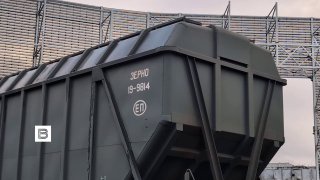
The port of Murmansk received a train with grain for the first time, opening an alternative port for export. Before that, the vast majority of Russian grain went out through the ports of the Azov-Black Sea basin. "47 wagons, 3,400 tons of grain from central agricultural regions in Russia - this is the port's first experience working with such cargo. In conditions where traditional export routes are facing restrictions, MMSP is rapidly opening up alternative access to foreign markets for Russian farmers." The port pre-arranged the operation of hopper wagons through a storage bunker using mobile conveyors. This program allows direct delivery of grain to the ship's cabin, bypassing intermediate storage in the warehouse. Earlier, the CEO of MMTP, Pavel Olynyk, told reporters that the port is capable of moving from 60 to 100 thousand tons of grain per month. At the same time, MMTP does not plan to build a separate grain terminal, and will remain a universal port.
The port of Murmansk received a train with grain for the first time, opening an alternative port for export. Before that, the vast majority of Russian grain went out through the ports of the Azov-Black Sea basin. "47 wagons, 3,400 tons of grain from central agricultural regions in Russia - this is the port's first experience working with such cargo. In conditions where traditional export routes are facing restrictions, MMSP is rapidly opening up alternative access to foreign markets for Russian farmers." The port pre-arranged the operation of hopper wagons through a storage bunker using mobile conveyors. This program allows direct delivery of grain to the ship's cabin, bypassing intermediate storage in the warehouse. Earlier, the CEO of MMTP, Pavel Olynyk, told reporters that the port is capable of moving from 60 to 100 thousand tons of grain per month. At the same time, MMTP does not plan to build a separate grain terminal, and will remain a universal port.
🇷🇺 Russia · Map
More on Radar
Want to see every report in real time?
Hundreds of sources worldwide, translated into your language, with alerts for what matters to you.
Sign up free Already have an account? Log in