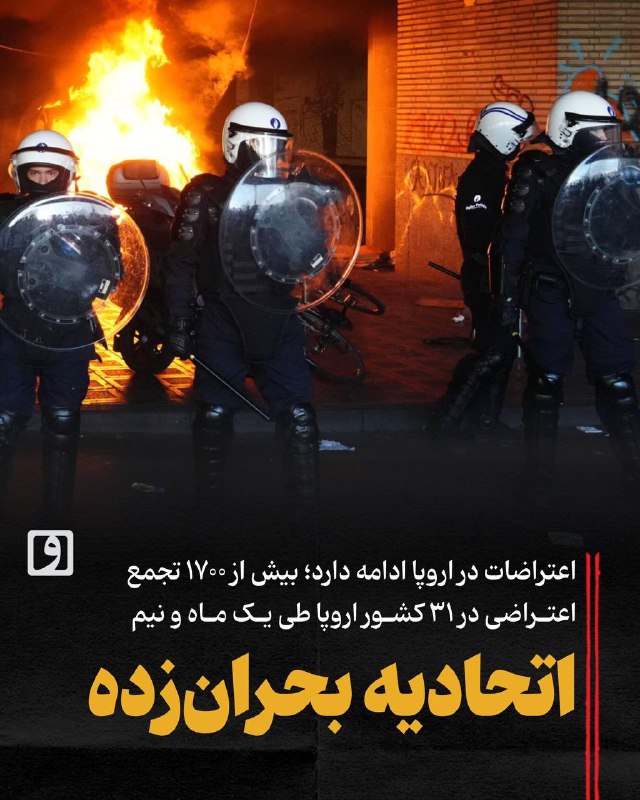
Union in crisis; Protests continue in Europe; More than 1,700 protest rallies in 31 European countries within a month and a half.
Summary: Protests across Europe began in France on September 17, 2026 and spread to countries such as Spain, Belgium, Italy, Portugal and Albania. These protests initially had economic and union demands, but gradually turned into a movement against the economic and social policies of the governments. In Brussels, 50,000 people took to the streets to protest against the government's austerity plans, pension reforms and rising living costs.
At the same time as the demonstrations, a nationwide strike in Belgium disrupted air, train, bus and school operations. The main root of the protests is opposition to the Prime Minister's policy and the government's plan to save 10 billion euros by 2029. The difference between the coalition parties on the reduction of expenses and the increase of taxes also put the government in front of a crisis.
In the past three months, countries such as France, Italy, Spain, Portugal, Germany, Greece, Ireland and Serbia have seen massive protests and strikes. The increase in the cost of living, the low wages, the housing crisis, the high rent, the reduction of public services and opposition to the economic policies of governments were the most important reasons for this dissatisfaction.
According to Al Jazeera statistics, between September 15 and October 30, more than 1,700 protest rallies and riots were recorded in 31 European countries. France was at the top with more than 1,200 cases. Also last week coordinated demonstrations and strikes were held in more than 20 countries and in Italy more than a million people participated in protest meetings.
The war between the United States and Israel against Iran and the disruption of the transfer of energy from the Persian Gulf and the Strait of Hormuz put additional pressure on the European economy. The increase in the price of fuel, the cost of transportation and production led to an increase in inflation and a decrease in the purchasing power of households. These consequences exacerbated the growing economic and social discontent in Europe and made governments face more political and social costs.
Read the full text on Watan's website today.