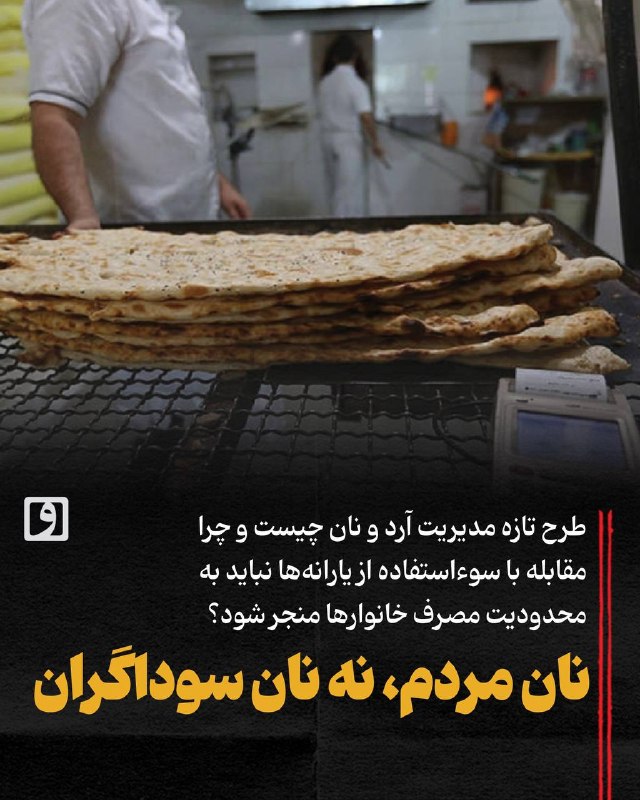
Bread of the people, not bread of merchants; What is the new plan for the management of flour and bread and why will dealing with abuse of subsidies not lead to domestic consumption restrictions?
Abstract: Bread is one of the most important basic products and supports the livelihood of Iranian households. The publication of the news about the changes in the "Nanino" method and the introduction of the word cover created concerns about the restriction of buying and the increase in the price of bread; But the officials emphasized that general rationing for domestic consumption was not considered.
The Nanino system was developed with the aim of identifying unusual purchases, preventing the diversion of subsidized flour and dealing with abuse of beneficiaries. According to the explanations of the sources, people's regular purchases are still made at a subsidized rate, and the supervision focuses on large purchases and suspicious behaviors that could lead to the resale of bread or commercial use of the subsidy.
By subsidizing wheat and flour, the government tries to keep the price of bread low for households. However, the gap between the subsidized and free prices gives room for abuse. It is necessary to prevent the sale of flour outside the network and unconventional transactions, but a distinction between normal consumption and commercial consumption should be made according to the number of family members, the regional conditions and the pattern of consumption. Also, it should be possible to protest and handle system errors.
Along with the consumers, the status of the bakeries and production units is also important. An increase in the costs of wages, energy, rent and transportation as well as a decrease in the flour quota of some of the industrial bread production units may lead to a decrease in production and a decrease in quality. Therefore, the tracking of the purchases must be followed at the same time as the supply of the raw materials and the support of the manufacturers.
Price stability and people's access to bread, especially in conditions of economic pressure and war, is part of food security and the peace of society. Government policy should include prevention of abuse, preservation of wheat stocks, continuity of baking, support for bakeries and accurate information. The sudden increase in the price of bread directly increases the cost of household food and has heavy consequences for the lower classes; Therefore, the bread subsidy reform should not be done through a sudden increase in household consumption prices.
Read the full text on Watan's website today.