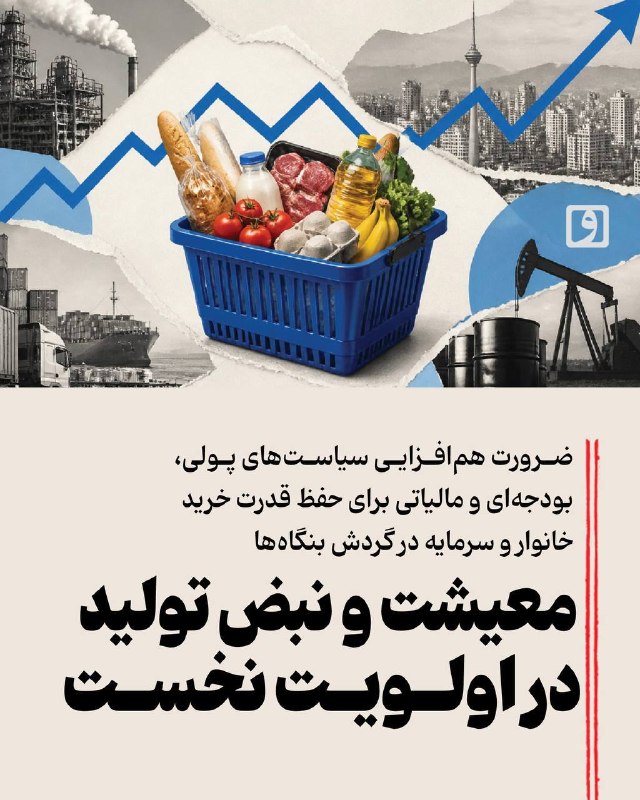
livelihood and production pulse as first priority; The necessity of a synergistic monetary, budgetary and tax policy to maintain the purchasing power of households and the working capital of companies.
Summary: Iran's economy is facing increasing trade costs and external pressures, and the government is expected to maintain the stability of the people's livelihood and national production by relying on the state's resources. However, the incoherence of the support, budget and banking policies put pressure on the purchasing power of households and the working capital of enterprises.
Providing currency for basic goods does not mean providing domestic spending, and consumer support requires real resources and budget mechanisms. In a state of war, the government must allocate limited resources to food security, to maintaining employment and essential activities by correcting unnecessary expenditures and publishing transparent budget reports.
The increase in Kelberg credit is expected to support the purchasing power of households, but the complexity of the acceptance process and the dispute over the beneficiaries made it difficult for some families to access this support. The Court of Accounts also considered the exclusion of beneficiaries without a clear legal qualification as lacking a legal basis and emphasized the need to review the performance of the responsible institutions.
In the manufacturing sector, the increase in bank facility rates and financing costs made it difficult for enterprises to access working capital. Monetary tightening to curb inflation should not prevent healthy companies from providing liquidity. Also, reviewing ineffective tax exemptions and dealing with tax evasion can help provide resources and establish tax justice.
Support and livelihood production are interdependent. At the same time, efforts must be made to unify Kelberg's credits, correct excessive government spending, redirect facilities to real production, and organize tax exemptions. The coordination between the central bank, the organization of the program and the budget and the responsible offices is necessary to maintain purchasing power, working capital, employment and economic stability.
Read the full text on Watan's website today.