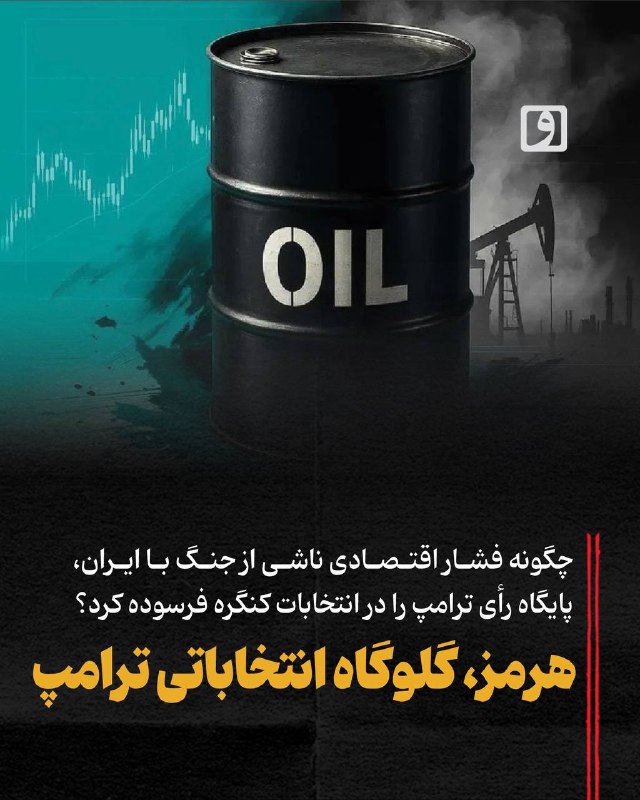
Hormuz, Trump's electoral bottleneck; How did the economic pressure caused by the war with Iran erode Trump's voter base in the congressional elections? Summary: The defeat of the Republicans in the mid-term elections, the position of Trump and J. Di Vance about the impact of the war against Iran and the 8.7% drop in the price of Brent oil are signs of a change in Washington's political calculations. However, the drop in oil prices and a possible end to the war does not mean the end of its economic consequences. The main issue is Iran's position in the new economic relations in the world. Politics, financial markets and the real economy move at different speeds. Political commentary can change oil prices, but rebuilding refineries, returning ships to trade routes and returning investment will take time and certainty. The export of Persian Gulf oil products decreased from 4.7 to 1.9 million barrels per day, and the export of liquefied petroleum gas also increased from 1.5 million to 670 thousand barrels. Therefore, a decrease in the price of crude oil does not necessarily result in a decrease in the cost of fuel and life. The gas market also faces long-term damages. The International Energy Agency has predicted a decline in global supplies of liquefied natural gas and cumulative shortfalls by 2030. Damage to infrastructure, changes in export routes and increased investments by countries to ensure energy security will continue even after the end of the war and will change the economy of the region. The defeat of the Republicans and Vance's position could increase the political cost of continuing the war, but it does not necessarily mean a change in American strategy or an agreement to Iran's demands. On the other hand, diplomacy and efforts to reduce sanctions are important, but economic decision-making in the country should not depend on the results of the negotiations. The restoration of economic power must go hand in hand with diplomacy. The recent war provided an opportunity to reorganize the geography of Iran's trade. Developing a north-south route, strengthening the ports of Khabar and Jask, completing railway lines and roads and revising customs regulations can activate the country's transit capacity. Cooperation with China in the field of energy, refining, petrochemicals and transportation infrastructure is also important. Presenting a clear and effective plan for Iran's role in the regional economy can increase the country's bargaining power. Read the full text on this month's site today.
Hormuz, Trump's electoral bottleneck; How did the economic pressure caused by the war with Iran erode Trump's voter base in the congressional elections? Summary: The defeat of the Republicans in the mid-term elections, the position of Trump and J. Di Vance about the impact of the war against Iran and the 8.7% drop in the price of Brent oil are signs of a change in Washington's political calculations. However, the drop in oil prices and a possible end to the war does not mean the end of its economic consequences. The main issue is Iran's position in the new economic relations in the world. Politics, financial markets and the real economy move at different speeds. Political commentary can change oil prices, but rebuilding refineries, returning ships to trade routes and returning investment will take time and certainty. The export of Persian Gulf oil products decreased from 4.7 to 1.9 million barrels per day, and the export of liquefied petroleum gas also increased from 1.5 million to 670 thousand barrels. Therefore, a decrease in the price of crude oil does not necessarily result in a decrease in the cost of fuel and life. The gas market also faces long-term damages. The International Energy Agency has predicted a decline in global supplies of liquefied natural gas and cumulative shortfalls by 2030. Damage to infrastructure, changes in export routes and increased investments by countries to ensure energy security will continue even after the end of the war and will change the economy of the region. The defeat of the Republicans and Vance's position could increase the political cost of continuing the war, but it does not necessarily mean a change in American strategy or an agreement to Iran's demands. On the other hand, diplomacy and efforts to reduce sanctions are important, but economic decision-making in the country should not depend on the results of the negotiations. The restoration of economic power must go hand in hand with diplomacy. The recent war provided an opportunity to reorganize the geography of Iran's trade. Developing a north-south route, strengthening the ports of Khabar and Jask, completing railway lines and roads and revising customs regulations can activate the country's transit capacity. Cooperation with China in the field of energy, refining, petrochemicals and transportation infrastructure is also important. Presenting a clear and effective plan for Iran's role in the regional economy can increase the country's bargaining power. Read the full text on this month's site today.
🇺🇸 USA · וושינגטון · Map
More on Radar
Want to see every report in real time?
Hundreds of sources worldwide, translated into your language, with alerts for what matters to you.
Sign up free Already have an account? Log in