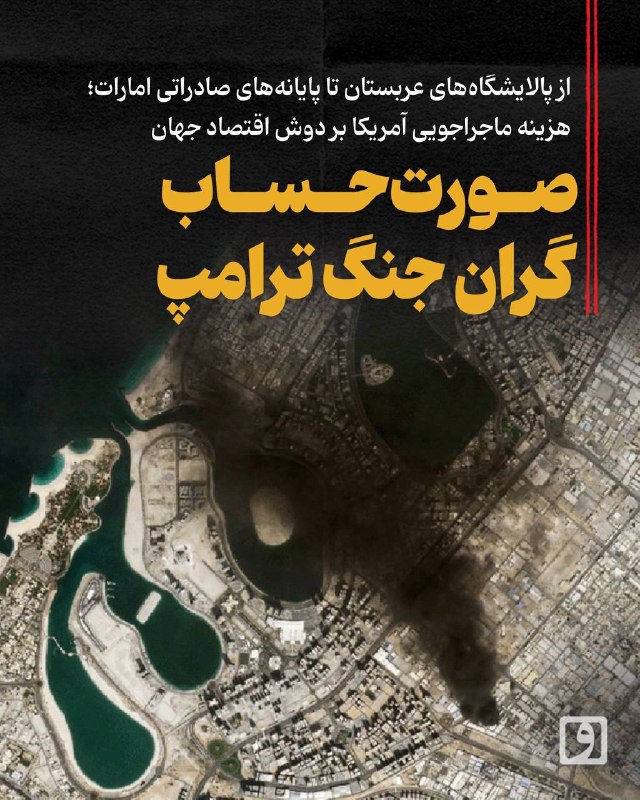
Trump's war banknotes; from Saudi refineries to UAE export terminals; the price of America's adventure on the shoulders of the global economy Summary: The Persian Gulf was once considered a safe energy zone, but the US and Israeli war against Iran destroyed the region's energy security. Since the start of the war on February 28, the region's refineries, liquefied natural gas production units, and export terminals have suffered heavy damage, and rebuilding much of this infrastructure will take years. Missile interception is not a good metric for measuring the protection of energy infrastructure, because a hit by even a few missiles can disable the vital facilities of Arab countries in the region. According to a Reuters study, at least 135 missile and drone attacks have been carried out on 84 infrastructure centers in 7 countries in the region. Also, attacks hit 5 out of 9 major Saudi refineries and two oil loading systems at the Fujairah terminal. Qatar also lost 17% of its export capacity due to damage to two gas production units in Ras Laffan. Repairing this facility takes 5 years and affects QatarEnergy's $20 billion revenue annually. Saudi Arabia, the UAE, and Bahrain are also exposed to potential attacks due to the concentration of energy facilities and the limitation of alternative routes through the Strait of Hormuz. A possible new war against Iran could confront the global energy market with a supply chain crisis. Wood Mackenzie institute warned that in the event of a long-term disruption in the Strait of Hormuz, the price of oil could reach $200 per barrel and the export of more than 80 million tons of liquefied natural gas, equivalent to 20% of global supply, will be disrupted. The rise in the cost of fuel, transportation, food, and industrial production will also be one of the consequences of this crisis. Iran's response to any possible aggression will also include US military bases. According to the Wall Street Journal, in the first six months of the war, 274 buildings in 24 US military facilities in 7 countries in the region were damaged. The cost of the war reached $47.1 billion by October 16, and the damage to military bases is estimated at least $5 billion. Read the full text on the Alef Today website:
Trump's war banknotes; from Saudi refineries to UAE export terminals; the price of America's adventure on the shoulders of the global economy Summary: The Persian Gulf was once considered a safe energy zone, but the US and Israeli war against Iran destroyed the region's energy security. Since the start of the war on February 28, the region's refineries, liquefied natural gas production units, and export terminals have suffered heavy damage, and rebuilding much of this infrastructure will take years. Missile interception is not a good metric for measuring the protection of energy infrastructure, because a hit by even a few missiles can disable the vital facilities of Arab countries in the region. According to a Reuters study, at least 135 missile and drone attacks have been carried out on 84 infrastructure centers in 7 countries in the region. Also, attacks hit 5 out of 9 major Saudi refineries and two oil loading systems at the Fujairah terminal. Qatar also lost 17% of its export capacity due to damage to two gas production units in Ras Laffan. Repairing this facility takes 5 years and affects QatarEnergy's $20 billion revenue annually. Saudi Arabia, the UAE, and Bahrain are also exposed to potential attacks due to the concentration of energy facilities and the limitation of alternative routes through the Strait of Hormuz. A possible new war against Iran could confront the global energy market with a supply chain crisis. Wood Mackenzie institute warned that in the event of a long-term disruption in the Strait of Hormuz, the price of oil could reach $200 per barrel and the export of more than 80 million tons of liquefied natural gas, equivalent to 20% of global supply, will be disrupted. The rise in the cost of fuel, transportation, food, and industrial production will also be one of the consequences of this crisis. Iran's response to any possible aggression will also include US military bases. According to the Wall Street Journal, in the first six months of the war, 274 buildings in 24 US military facilities in 7 countries in the region were damaged. The cost of the war reached $47.1 billion by October 16, and the damage to military bases is estimated at least $5 billion. Read the full text on the Alef Today website:
🇺🇸 USA · וול סטריט · Map
More on Radar
Want to see every report in real time?
Hundreds of sources worldwide, translated into your language, with alerts for what matters to you.
Sign up free Already have an account? Log in