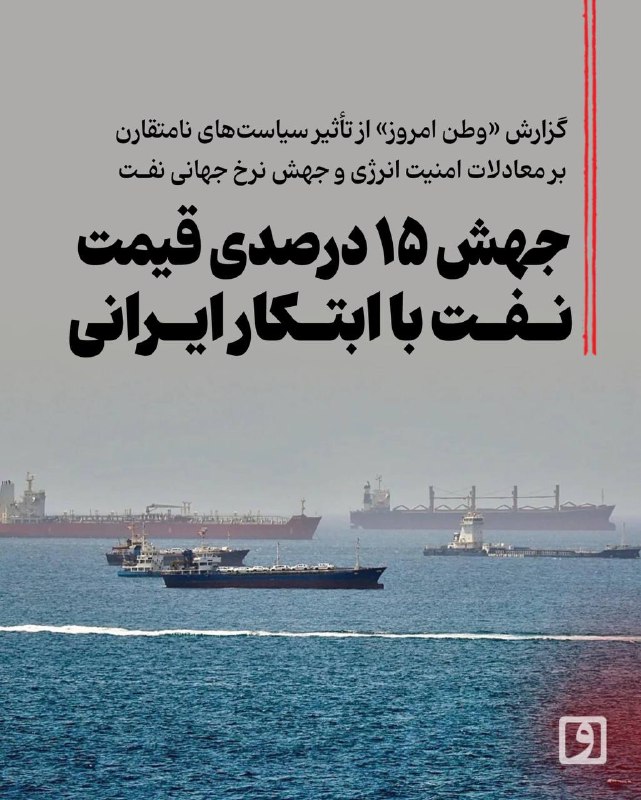
A 15% jump in the price of oil with an Iranian initiative; The "Wetan Amroz" report on the impact of asymmetric policies on energy security equations and the jump in global oil prices Summary: The 15% jump in oil prices last month and the rise of Brent oil to $118 revealed the fragility of the world's energy security and its dependence on the stability of West Asia. Instead of actual supply and demand, the energy market is currently priced under the influence of predicting the risks caused by the insecurity of the waterways, the vulnerability of strategic facilities and the continuation of the war. The price of Brent oil rose 13.6% and West Texas Intermediate oil rose 15.2% this month. This growth is more than a result of the physical shortage of oil, it is caused by "risk consumption"; The amount that traders add to the price of oil due to the possibility of the war spreading, damage to export terminals and insecurity in the sea lanes. The attack on an oil tanker in the Strait of Hormuz and the threat to Saudi oil facilities, including the Ras Tanura and Rabigh refineries and the Bajak facility, raised concerns about the disruption of energy exports. The experience of the 2019 attack on the Bajak and Khurais facilities showed that damage to strategic centers can derail a large part of oil production capacity. The withdrawal of non-essential American workers from Saudi Arabia has also heightened traders' caution. The American and Israeli elections have also become an influential variable in the oil market. Traders are uncertain about the path of diplomacy and the possibility of escalation of conflicts after the elections. The return of the Qatari mediators to Tehran and the continued efforts to reach an agreement between Iran and the United States failed to lower prices; Because the market will continue to consider the possibility of a price war until the practical signs of the easing of tension are revealed. Saxo Bank predicts that even after the end of the war, the price of oil will remain in the range between 70 and 90 dollars; Even before the war it was between 60 and 70 dollars. At the same time, the cessation of the daily transfer of approximately 15,000 barrels of oil in Libya shows the vulnerability of the supply chain. The insecurity in the infrastructures, the disruption of the transmission routes and the lack of prospects for the end of the war kept the market free of risk. Read the full text on this month's site today:.
A 15% jump in the price of oil with an Iranian initiative; The "Wetan Amroz" report on the impact of asymmetric policies on energy security equations and the jump in global oil prices Summary: The 15% jump in oil prices last month and the rise of Brent oil to $118 revealed the fragility of the world's energy security and its dependence on the stability of West Asia. Instead of actual supply and demand, the energy market is currently priced under the influence of predicting the risks caused by the insecurity of the waterways, the vulnerability of strategic facilities and the continuation of the war. The price of Brent oil rose 13.6% and West Texas Intermediate oil rose 15.2% this month. This growth is more than a result of the physical shortage of oil, it is caused by "risk consumption"; The amount that traders add to the price of oil due to the possibility of the war spreading, damage to export terminals and insecurity in the sea lanes. The attack on an oil tanker in the Strait of Hormuz and the threat to Saudi oil facilities, including the Ras Tanura and Rabigh refineries and the Bajak facility, raised concerns about the disruption of energy exports. The experience of the 2019 attack on the Bajak and Khurais facilities showed that damage to strategic centers can derail a large part of oil production capacity. The withdrawal of non-essential American workers from Saudi Arabia has also heightened traders' caution. The American and Israeli elections have also become an influential variable in the oil market. Traders are uncertain about the path of diplomacy and the possibility of escalation of conflicts after the elections. The return of the Qatari mediators to Tehran and the continued efforts to reach an agreement between Iran and the United States failed to lower prices; Because the market will continue to consider the possibility of a price war until the practical signs of the easing of tension are revealed. Saxo Bank predicts that even after the end of the war, the price of oil will remain in the range between 70 and 90 dollars; Even before the war it was between 60 and 70 dollars. At the same time, the cessation of the daily transfer of approximately 15,000 barrels of oil in Libya shows the vulnerability of the supply chain. The insecurity in the infrastructures, the disruption of the transmission routes and the lack of prospects for the end of the war kept the market free of risk. Read the full text on this month's site today:.
🇸🇦 Saudi Arabia · Map
More on Radar
Want to see every report in real time?
Hundreds of sources worldwide, translated into your language, with alerts for what matters to you.
Sign up free Already have an account? Log in