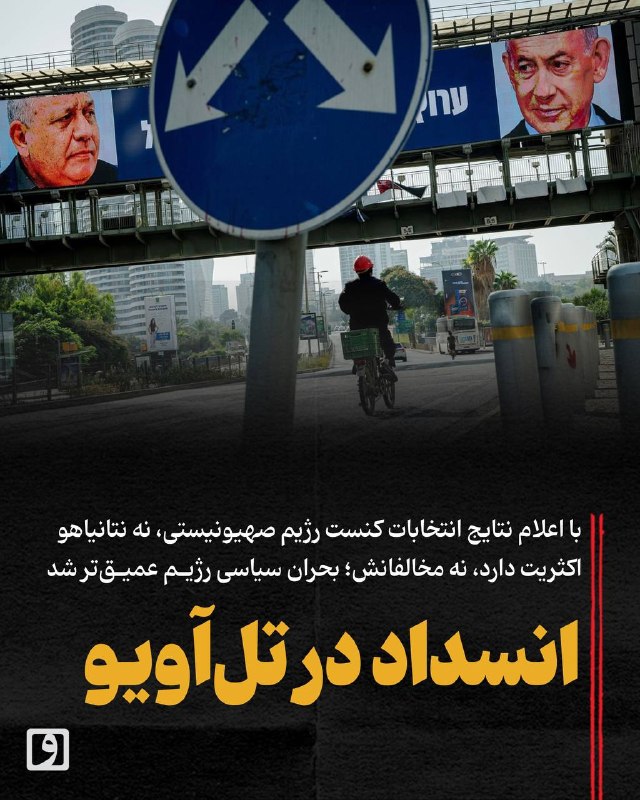
blockage in Tel Aviv; With the publication of the results of the Israeli Knesset elections, neither Netanyahu nor his opponents have a majority; The regime's political crisis deepened Summary: With the publication of the results of the Knesset elections, the status of Israel's future cabinet is still unknown. According to the vote count, Netanyahu's faction won 53 mandates, his opponents 48 mandates and the Arab List 19 mandates; While the formation of the cabinet requires at least 61 seats out of a total of 120 seats. Eugene Rogan, director of Oxford University's Middle East Center, saw the results as a sign of the polarization of Israeli society and cited endless wars, economic pressure and the exhaustion of the reserve forces as factors behind the demand to change the title. The election results could send Netanyahu and his main opponent, Gadi Eisenkot, into weeks of negotiations to form a cabinet. Netanyahu may make concessions to smaller parties to maintain power; An action that may lead to the formation of a fragile cabinet. The failure of the negotiations also increases the possibility of bringing forward elections and makes it difficult to make decisions on budget, economic and security issues. Netanyahu's right-wing and religious coalition reached 53 seats out of 68 seats in the previous parliament. The war in Gaza, the consequences of the October 7 operation, security and military failures, the military service status of Orthodox Jews and the dispute over the independence of the judicial system are some of the issues that affected voter confidence. Eisenkot also saw the election results as a vote for change and asked Netanyahu to resign. However, Eisenkot also opposes the establishment of a Palestinian state, supports illegal settlements in the West Bank, and is known as the designer of the doctrine of non-existence; A strategy aimed at civil infrastructure. Some users believe that the change of prime minister will not necessarily lead to a change in Israel's approach. The newspaper "Yediot Ahronoth" saw the elections as the last chance for change and warned against further isolation of the regime. Yair Golan, head of the Democratic Party, also asked Netanyahu's opponents to form a coalition with Arab parties to form a new cabinet. He saw the increased participation of Arab citizens as an opportunity to change the power structure and emphasized the necessity to abandon racism. Read the full text on this month's site today:.
blockage in Tel Aviv; With the publication of the results of the Israeli Knesset elections, neither Netanyahu nor his opponents have a majority; The regime's political crisis deepened Summary: With the publication of the results of the Knesset elections, the status of Israel's future cabinet is still unknown. According to the vote count, Netanyahu's faction won 53 mandates, his opponents 48 mandates and the Arab List 19 mandates; While the formation of the cabinet requires at least 61 seats out of a total of 120 seats. Eugene Rogan, director of Oxford University's Middle East Center, saw the results as a sign of the polarization of Israeli society and cited endless wars, economic pressure and the exhaustion of the reserve forces as factors behind the demand to change the title. The election results could send Netanyahu and his main opponent, Gadi Eisenkot, into weeks of negotiations to form a cabinet. Netanyahu may make concessions to smaller parties to maintain power; An action that may lead to the formation of a fragile cabinet. The failure of the negotiations also increases the possibility of bringing forward elections and makes it difficult to make decisions on budget, economic and security issues. Netanyahu's right-wing and religious coalition reached 53 seats out of 68 seats in the previous parliament. The war in Gaza, the consequences of the October 7 operation, security and military failures, the military service status of Orthodox Jews and the dispute over the independence of the judicial system are some of the issues that affected voter confidence. Eisenkot also saw the election results as a vote for change and asked Netanyahu to resign. However, Eisenkot also opposes the establishment of a Palestinian state, supports illegal settlements in the West Bank, and is known as the designer of the doctrine of non-existence; A strategy aimed at civil infrastructure. Some users believe that the change of prime minister will not necessarily lead to a change in Israel's approach. The newspaper "Yediot Ahronoth" saw the elections as the last chance for change and warned against further isolation of the regime. Yair Golan, head of the Democratic Party, also asked Netanyahu's opponents to form a coalition with Arab parties to form a new cabinet. He saw the increased participation of Arab citizens as an opportunity to change the power structure and emphasized the necessity to abandon racism. Read the full text on this month's site today:.
🇮🇱 Israel · תל אביב · Map
More on Radar
Want to see every report in real time?
Hundreds of sources worldwide, translated into your language, with alerts for what matters to you.
Sign up free Already have an account? Log in