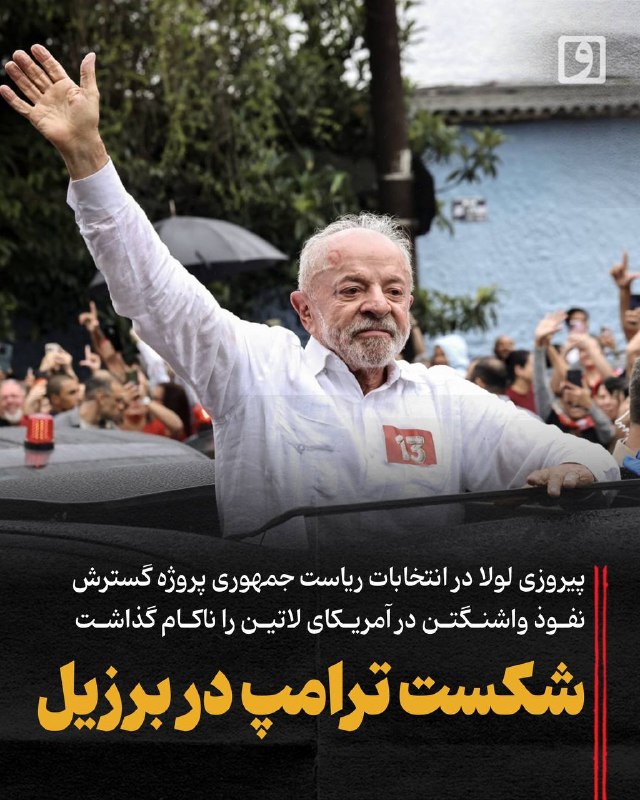
Trump's defeat in Brazil; Lula's victory in the presidential elections failed in the project of expanding Washington's influence in Latin America Summary: The re-election of Luiz Inacio Lula da Silva as president of Brazil is considered a political blow to Donald Trump and the far-right trend that aligns with you in Latin America; The failure showed that economic pressure, trade tariffs and Washington's support for right-wing allies do not necessarily lead to their victory in the elections. In the second round of the election on October 25, Lula defeated Flavio Bolsonaro by a margin of 4.4 million votes, winning 51.8 percent of the vote and becoming president for a fourth non-consecutive term. This result for Trump is not only the loss of a potential ally, but also a strategic failure to bring regional governments closer to Washington's policies. As the largest economy and most populous country in Latin America, Brazil plays a crucial role in the political and economic balance of the region. After his victory, Lula emphasized that Brazil would not accept the backyard of any power and promised to respect all citizens, regardless of gender or religion. Washington seeks to expand the security cooperation of the countries of the region and additional access to Brazil's strategic minerals. With Lola's victory, these goals are more difficult to advance; Because his administration emphasizes the independence of foreign policy and maintaining relations with America's rival powers. Lola also advocates strengthening cooperation with Asian countries, China and the BRICS group; While Bolsonaro promised to join the American security coalition. After the results were announced, Flavio Bolsonaro refused to accept defeat and demanded the annulment of the election. He protested the extension of the voting time by 2 hours; But the head of the election tribunal announced that this decision did not change the result. Even a law professor did not see a solid legal basis for canceling the elections. According to the New York Times, Washington could not push Brazil towards a government that matches its agenda with commercial pressure and political closeness to the Bolsonaro family. Lula won by making national independence the focus of the electoral contest and exploiting the fear of foreign pressure. This election showed that America's economic influence and political pressure do not necessarily lead to the victory of its allies at the ballot box.
Trump's defeat in Brazil; Lula's victory in the presidential elections failed in the project of expanding Washington's influence in Latin America Summary: The re-election of Luiz Inacio Lula da Silva as president of Brazil is considered a political blow to Donald Trump and the far-right trend that aligns with you in Latin America; The failure showed that economic pressure, trade tariffs and Washington's support for right-wing allies do not necessarily lead to their victory in the elections. In the second round of the election on October 25, Lula defeated Flavio Bolsonaro by a margin of 4.4 million votes, winning 51.8 percent of the vote and becoming president for a fourth non-consecutive term. This result for Trump is not only the loss of a potential ally, but also a strategic failure to bring regional governments closer to Washington's policies. As the largest economy and most populous country in Latin America, Brazil plays a crucial role in the political and economic balance of the region. After his victory, Lula emphasized that Brazil would not accept the backyard of any power and promised to respect all citizens, regardless of gender or religion. Washington seeks to expand the security cooperation of the countries of the region and additional access to Brazil's strategic minerals. With Lola's victory, these goals are more difficult to advance; Because his administration emphasizes the independence of foreign policy and maintaining relations with America's rival powers. Lola also advocates strengthening cooperation with Asian countries, China and the BRICS group; While Bolsonaro promised to join the American security coalition. After the results were announced, Flavio Bolsonaro refused to accept defeat and demanded the annulment of the election. He protested the extension of the voting time by 2 hours; But the head of the election tribunal announced that this decision did not change the result. Even a law professor did not see a solid legal basis for canceling the elections. According to the New York Times, Washington could not push Brazil towards a government that matches its agenda with commercial pressure and political closeness to the Bolsonaro family. Lula won by making national independence the focus of the electoral contest and exploiting the fear of foreign pressure. This election showed that America's economic influence and political pressure do not necessarily lead to the victory of its allies at the ballot box.
🇧🇷 Brazil · Map
More on Radar
Want to see every report in real time?
Hundreds of sources worldwide, translated into your language, with alerts for what matters to you.
Sign up free Already have an account? Log in