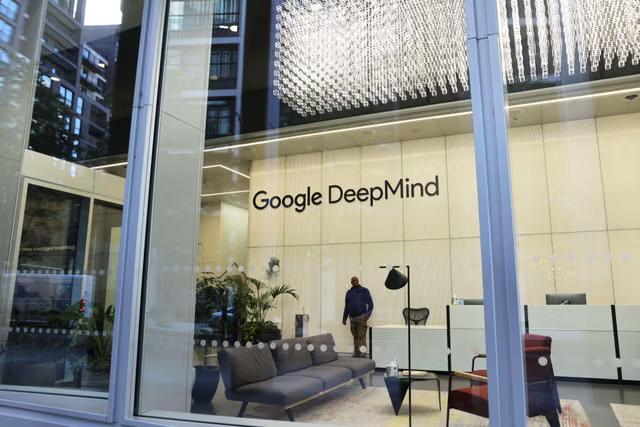
Google is opening Pandora's box: Gemini is already helping to create more advanced versions of itself.
The new head of Google DeepMind, Koray Kavukcuoglu, stated this in an interview with the Financial Times. In recent months, the company has released four new Gemini models, enabling Google to regain its leading position in the race with Anthropy and OpenAI. Part of DeepMind's computing power has already been transferred to AI agents who independently test hypotheses, conduct experiments, and analyze results to create the next generations of twins. As early as May 2025, the AlphaEvolve agent found a way to speed up one of its computational operations by 23% and reduce Gemini's total workout time by 1%. For now, humans control this process, but the most radical scenario assumes AI can independently create a smarter model from it, creating an even more advanced model, and the cycle will repeat at an accelerating pace. This is called recursive self-improvement (RSI). The problem is that if one company launches such an autonomous cycle, its competitors will have to choose between the risk of losing control over AI and the risk of hopelessly falling behind in the technological race. Also in September, AI pioneers Jeffrey Hinton and Joshua Bengio, Anthropo founder Jack Clark, and OpenAI's chief scientist Jakub Pachocki warned of the need to prepare for a "possible intelligence explosion." And two days ago, the journal Nature published a column calling on the U.S. Congress to ban the creation of artificial intelligence that can improve without human control. At the same time, the head of DeepMind himself promises that Google does not intend to completely abandon human oversight, fearing loss of control over superintelligence. Let's remember that just yesterday we wrote that artificial intelligence is already solving mathematical problems faster than scientists have time to understand the results.