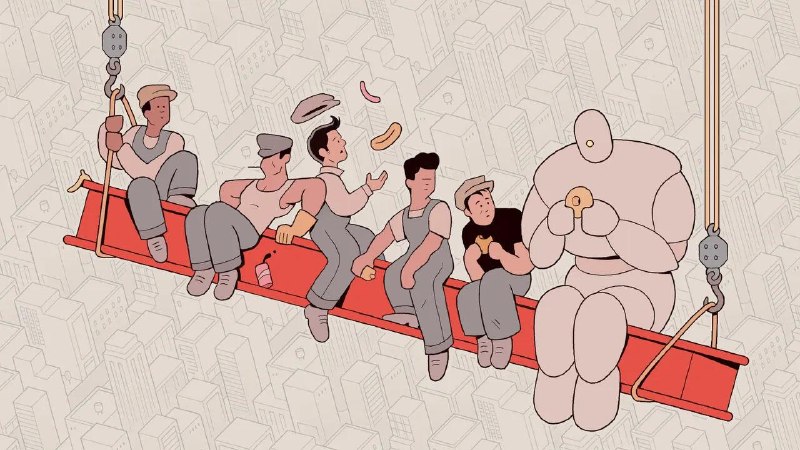
The advice "AI will take office work, so go to the plumber" may soon be obsolete: the era of gay robots is much closer than we think. Modern robots already surpass humans in some indicators of strength, speed and anxiety, and most importantly, they are becoming cheaper. Between 2023 and 2025 alone, the average cost of humanoids in China dropped by 72%. However, effectively doing as ruins and working with a complete change in the factory are completely different things. More than 60 percent of the humans sent in the first half of 2026 were for entertainment, data collection and research. The challenge is not so much to teach a robot how to perform a certain task as to enable it to perform it hundreds of times a day over the years, in dust, dirt and unexpected obstacles. Therefore, the first mass market of the homoids can be our homes, where the loads are lower and the demands for physical strength are lower. Google DeepMind predicts one million robots in the US home by 2031, while Morgan Stanley predicts 1.6 million by 2040. However, the price remains daunting. Most Americans are not willing to pay for a home robot more than & #036;5 thousand, while, for example, the company 1X offers its own for & #036; 20 thousand. The undisputed leader of the robotic revolution is China, which already accounts for more than 80% of all gay robots in the world. In the future, mass robotization could reshape the entire global economy. When choosing a place to build factories, the cost of land and electricity can be more important than the cost of labor. Countries that have built their economic development on cheap human labor will have to find a new competitive advantage. Therefore, the era when manual labor was considered insurance against artificial intelligence may also be short-lived. UNIAN ב-Google | X | YouTube.
The advice "AI will take office work, so go to the plumber" may soon be obsolete: the era of gay robots is much closer than we think. Modern robots already surpass humans in some indicators of strength, speed and anxiety, and most importantly, they are becoming cheaper. Between 2023 and 2025 alone, the average cost of humanoids in China dropped by 72%. However, effectively doing as ruins and working with a complete change in the factory are completely different things. More than 60 percent of the humans sent in the first half of 2026 were for entertainment, data collection and research. The challenge is not so much to teach a robot how to perform a certain task as to enable it to perform it hundreds of times a day over the years, in dust, dirt and unexpected obstacles. Therefore, the first mass market of the homoids can be our homes, where the loads are lower and the demands for physical strength are lower. Google DeepMind predicts one million robots in the US home by 2031, while Morgan Stanley predicts 1.6 million by 2040. However, the price remains daunting. Most Americans are not willing to pay for a home robot more than & #036;5 thousand, while, for example, the company 1X offers its own for & #036; 20 thousand. The undisputed leader of the robotic revolution is China, which already accounts for more than 80% of all gay robots in the world. In the future, mass robotization could reshape the entire global economy. When choosing a place to build factories, the cost of land and electricity can be more important than the cost of labor. Countries that have built their economic development on cheap human labor will have to find a new competitive advantage. Therefore, the era when manual labor was considered insurance against artificial intelligence may also be short-lived. UNIAN ב-Google | X | YouTube.
🇨🇳 China · Map
More on Radar
Want to see every report in real time?
Hundreds of sources worldwide, translated into your language, with alerts for what matters to you.
Sign up free Already have an account? Log in