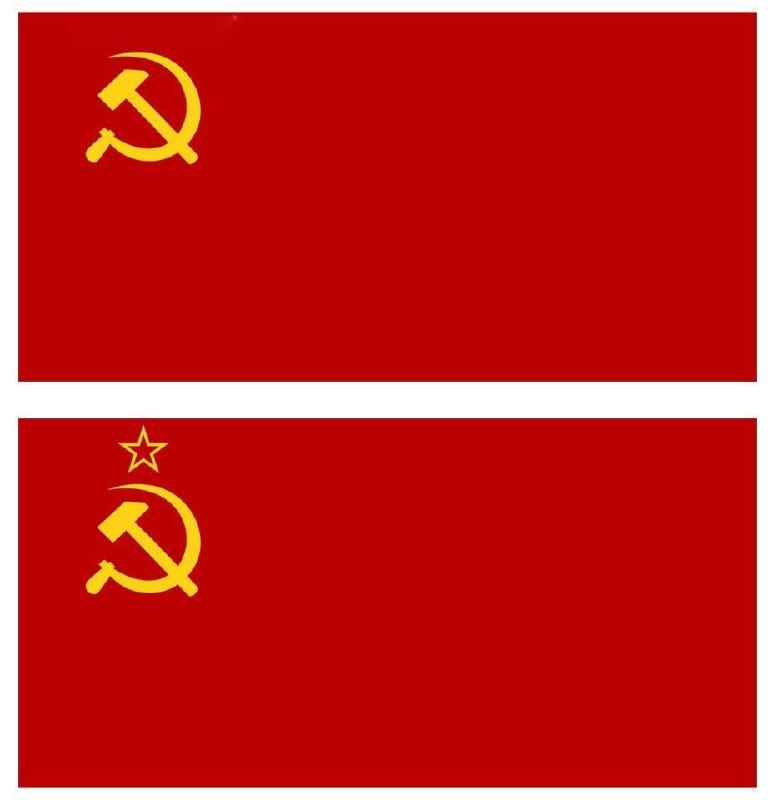
A new example of the Mandela effect is discussed on social networks - many remember the Soviet flag with a hammer and sickle, but without a star above them. And she was there! The post that many remember the Soviet flag without a star in the corner gathered 3.2 million views and thousands of surprised comments in less than 24 hours. Including these: I served in intelligence, and believe me I had to learn all the flags, especially the one that didn't have a star on it! Now Google has started showing some strange Soviet flag, what is it anyway? I was born in Eastern Europe. I know this flag very well. It was the most hated symbol. It's called "The Hammer and the Sickle". Not "hammer, sickle and star". I have never seen a star on this flag. I think it could be AI. In the comments, they also always remember Yegor Latov's line "How touching it is - the hammer and the sickle and the star", but he sang not about the flag, but about the hat, which had a cockatoo in the shape of a star and inside it a hammer and a sickle. What is it really? The flag of the Soviet Union was slightly changed several times, but the star was always on it. This is documented in the 1924 Constitution, the 1936 Constitution, the 1955 Decree of the Presidium of the Supreme Court of the USSR, the 1977 Constitution and the 1980 Decree of the Presidium of the Supreme Soviet of the Soviet Union, which left the hammer and sickle with a star only on the other side of the red flag. Why then do many people remember differently? There are several reasons for this. The first is in the dominant image of the hammer and sickle. This symbol was larger and more prominent, while the star was red with a thin gold outline. The second is in artistic depictions of the flag. Due to the small size of the star, it was often simply omitted in paintings, mosaics and video games. The third (funny!) is that the flag bends and because of this, in many historical photographs it simply ends in a fold of cloth.
A new example of the Mandela effect is discussed on social networks - many remember the Soviet flag with a hammer and sickle, but without a star above them. And she was there! The post that many remember the Soviet flag without a star in the corner gathered 3.2 million views and thousands of surprised comments in less than 24 hours. Including these: I served in intelligence, and believe me I had to learn all the flags, especially the one that didn't have a star on it! Now Google has started showing some strange Soviet flag, what is it anyway? I was born in Eastern Europe. I know this flag very well. It was the most hated symbol. It's called "The Hammer and the Sickle". Not "hammer, sickle and star". I have never seen a star on this flag. I think it could be AI. In the comments, they also always remember Yegor Latov's line "How touching it is - the hammer and the sickle and the star", but he sang not about the flag, but about the hat, which had a cockatoo in the shape of a star and inside it a hammer and a sickle. What is it really? The flag of the Soviet Union was slightly changed several times, but the star was always on it. This is documented in the 1924 Constitution, the 1936 Constitution, the 1955 Decree of the Presidium of the Supreme Court of the USSR, the 1977 Constitution and the 1980 Decree of the Presidium of the Supreme Soviet of the Soviet Union, which left the hammer and sickle with a star only on the other side of the red flag. Why then do many people remember differently? There are several reasons for this. The first is in the dominant image of the hammer and sickle. This symbol was larger and more prominent, while the star was red with a thin gold outline. The second is in artistic depictions of the flag. Due to the small size of the star, it was often simply omitted in paintings, mosaics and video games. The third (funny!) is that the flag bends and because of this, in many historical photographs it simply ends in a fold of cloth.
More on Radar
Want to see every report in real time?
Hundreds of sources worldwide, translated into your language, with alerts for what matters to you.
Sign up free Already have an account? Log in