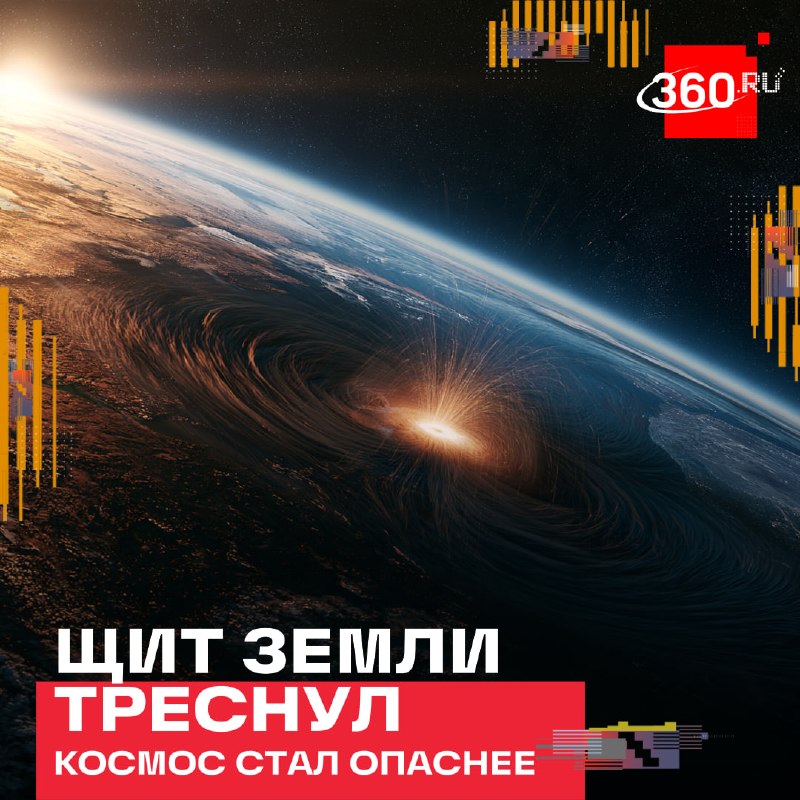
The barrier of the planet's radiation belts, which was considered indestructible, could not withstand the impact of the sun element. An international team of researchers found that the G5 storm compressed the Earth's plasmasphere and turned near-space into a region of extreme acceleration of charged particles. The electron energy increased in stages: first, less powerful particles became active, and a day later the satellite received a tremendous burst of hard radiation. Choir electromagnetic waves literally pumped particles with energy at a height of three Earth radii. The increased background radiation in this area continued until the fall of 2024, causing malfunctions and the accumulation of static charge on the instrument casing. The planet's magnetic field held up, but now conventional ideas about the safety of near-Earth orbits will have to be reconsidered.
The barrier of the planet's radiation belts, which was considered indestructible, could not withstand the impact of the sun element. An international team of researchers found that the G5 storm compressed the Earth's plasmasphere and turned near-space into a region of extreme acceleration of charged particles. The electron energy increased in stages: first, less powerful particles became active, and a day later the satellite received a tremendous burst of hard radiation. Choir electromagnetic waves literally pumped particles with energy at a height of three Earth radii. The increased background radiation in this area continued until the fall of 2024, causing malfunctions and the accumulation of static charge on the instrument casing. The planet's magnetic field held up, but now conventional ideas about the safety of near-Earth orbits will have to be reconsidered.
More on Radar
Want to see every report in real time?
Hundreds of sources worldwide, translated into your language, with alerts for what matters to you.
Sign up free Already have an account? Log in