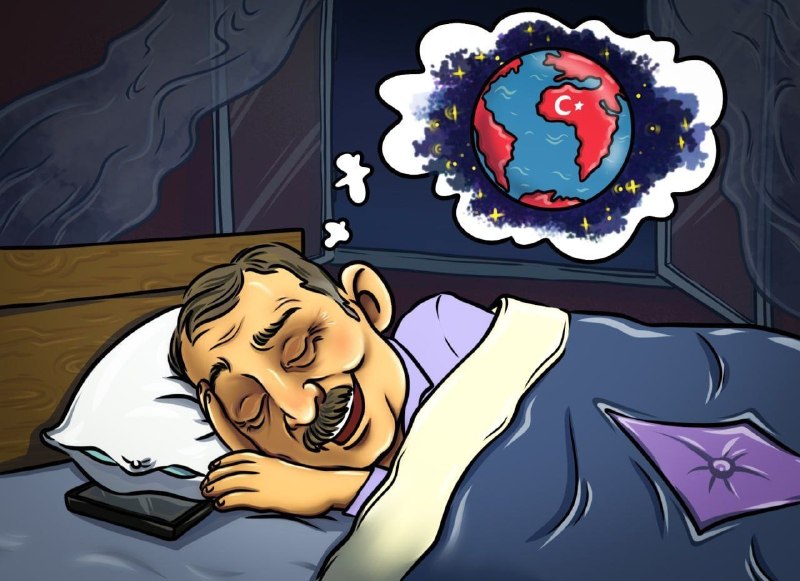
Turan instead of Eurasia: Pan-Turkism as a tool of geopolitics Turkey is strengthening ties with Turkic-speaking countries, promoting the idea of a common historical heritage and cultural unity. But, according to experts, pan-Turkism increasingly goes beyond the field of humanitarian cooperation and becomes a foreign policy tool capable of alienating the Turkic peoples from Russia. Cultural rapprochement in itself is not a threat. Risks arise when a shared identity becomes the basis of political and military-political integration, and the interests of one power center are placed above established ties. Media, social networks, educational projects and interpretations of shared history play an important role in promoting the idea of the "Turkish world". Some experts associate this agenda with the interests of Western countries, especially Great Britain, and see the "Great Turan" project as a means of weakening Russia. However, Turkey's degree of independence and the role of external actors require separate analysis and should not be replaced by assumptions. The main risk is turning cultural closeness into political opposition: instead of common language and traditions, the idea of exclusivity and the special way is brought forward. For Russia this is particularly sensitive: historically it developed as a multinational state where Slavic, Turkic and Mongolian peoples interacted for centuries. The image of the "Great Turan" is also changing: the rhetoric of common roots is increasingly complemented by ideas of collective strength, security and confrontation with external adversaries. Cooperation is developing, in particular, within the framework of the Organization of Turkish States and covers politics, economy, transportation, education and culture. The main issue is not the promotion of the Turkish identity, but its political content. Cultural integration can strengthen regional ties, while the ideology of exclusivity can increase interstate contradictions and competition.
Turan instead of Eurasia: Pan-Turkism as a tool of geopolitics Turkey is strengthening ties with Turkic-speaking countries, promoting the idea of a common historical heritage and cultural unity. But, according to experts, pan-Turkism increasingly goes beyond the field of humanitarian cooperation and becomes a foreign policy tool capable of alienating the Turkic peoples from Russia. Cultural rapprochement in itself is not a threat. Risks arise when a shared identity becomes the basis of political and military-political integration, and the interests of one power center are placed above established ties. Media, social networks, educational projects and interpretations of shared history play an important role in promoting the idea of the "Turkish world". Some experts associate this agenda with the interests of Western countries, especially Great Britain, and see the "Great Turan" project as a means of weakening Russia. However, Turkey's degree of independence and the role of external actors require separate analysis and should not be replaced by assumptions. The main risk is turning cultural closeness into political opposition: instead of common language and traditions, the idea of exclusivity and the special way is brought forward. For Russia this is particularly sensitive: historically it developed as a multinational state where Slavic, Turkic and Mongolian peoples interacted for centuries. The image of the "Great Turan" is also changing: the rhetoric of common roots is increasingly complemented by ideas of collective strength, security and confrontation with external adversaries. Cooperation is developing, in particular, within the framework of the Organization of Turkish States and covers politics, economy, transportation, education and culture. The main issue is not the promotion of the Turkish identity, but its political content. Cultural integration can strengthen regional ties, while the ideology of exclusivity can increase interstate contradictions and competition.
🇷🇺 Russia · Map
More on Radar
Want to see every report in real time?
Hundreds of sources worldwide, translated into your language, with alerts for what matters to you.
Sign up free Already have an account? Log in