life without water
Nature is an amazing engineer; It creates survival mechanisms that will hardly surpass humans. We tell you about five animals that have learned to live in hot deserts.
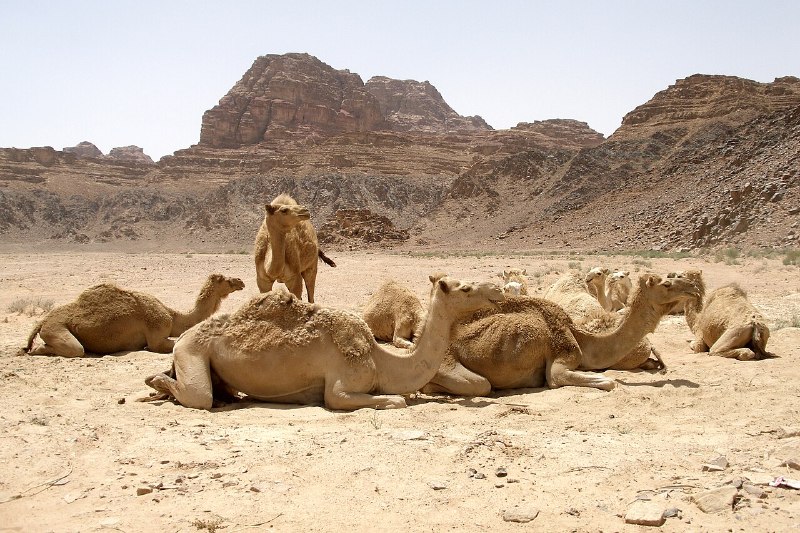
The most famous example is the camel. He can withstand a loss of up to 25% of his body weight due to dehydration - this is already fatal for humans. The camel's hump does not store water, but fat, the breakdown of which produces metabolic water. And the animal's nose works like a capacitor. When water appears, the camel drinks a huge amount each time, but does not store it for future use - the liquid immediately goes to restore the balance to the body.
The kangaroo barely drinks. The basis of his diet is dry seeds. He receives mainly metabolic water - that which is formed during the oxidation of fats and carbohydrates. The nose also helps: the air cools in the nasal passages, the moisture condenses and returns to the body. Its respiratory losses are significantly lower than those of other rodents of the same size.
The desert tortoise uses the bladder as a reservoir. After rain, she can gain up to 20% of her body weight and retain most of the water as very dilute urine.
A Stenocra beetle from the Namib desert collects water from a fog. The elytra are covered with microtubules: the upper part attracts droplets, the waxy surface between them repels them. The drops merge and flow directly into the mouth. The beetle simply rose upwind and lowered its body.
The Australian Moloch absorbs moisture throughout the skin. Between the scales there is a network of microchannels connected to the corners of the mouth. Dew, mist or even moisture from the sand flows into these capillaries and moves passively towards the oral cavity. The microstructures on the flakes improve condensation by twice that of a smooth surface.
All five strategies work on the same principle: get water where others can't see it, and hold it where others lose it.