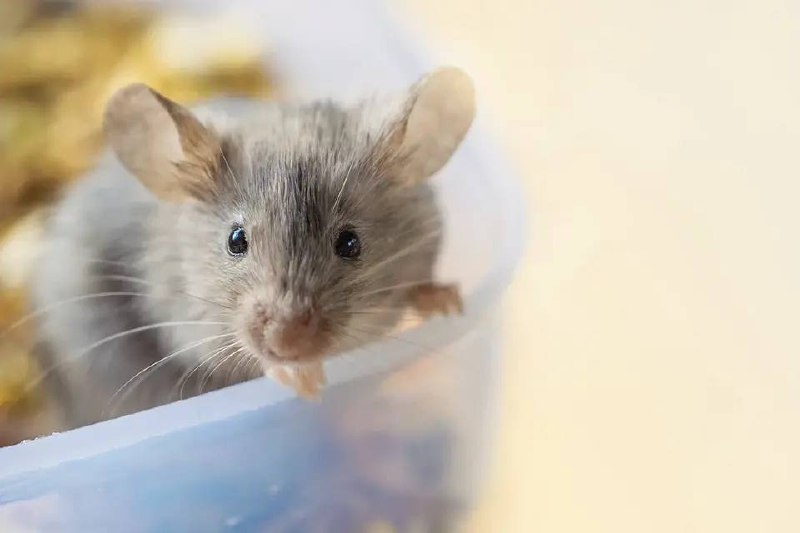
A mouse "fights without rules" revealed the nature of aggression in humans Scientists from Princeton University (USA) discovered how observing aggression changes the brain. The study was published in the journal Teva. The mice were divided into three groups: rodents from the first group were forced to fight with opponents for 10 minutes every day (own experience). The other group watched the contractions through a transparent partition (learning through observation). The third group lived in a compound with toys (control group). The first phase of the experiment lasted 8 days. Then mice from all three groups had to "enter the ring" with strong opponents. As a result, mice from the third group ran away from their aggressor more often. But the animals from the first two groups behaved in the same way - they first attacked more often and resisted better. At the same time, the same brain structures (hypothalamus, amygdala, midbrain) were activated in observers as in animals with real combat experience. That is, studying "behind a transparent partition" prepared them for a fight no worse than real battles. An experiment with mice provided a biological explanation for the pogrom phenomenon: if you see violence, it also changes your brain, just like directly participating in arbitrariness. Continue with card ⤴.
A mouse "fights without rules" revealed the nature of aggression in humans Scientists from Princeton University (USA) discovered how observing aggression changes the brain. The study was published in the journal Teva. The mice were divided into three groups: rodents from the first group were forced to fight with opponents for 10 minutes every day (own experience). The other group watched the contractions through a transparent partition (learning through observation). The third group lived in a compound with toys (control group). The first phase of the experiment lasted 8 days. Then mice from all three groups had to "enter the ring" with strong opponents. As a result, mice from the third group ran away from their aggressor more often. But the animals from the first two groups behaved in the same way - they first attacked more often and resisted better. At the same time, the same brain structures (hypothalamus, amygdala, midbrain) were activated in observers as in animals with real combat experience. That is, studying "behind a transparent partition" prepared them for a fight no worse than real battles. An experiment with mice provided a biological explanation for the pogrom phenomenon: if you see violence, it also changes your brain, just like directly participating in arbitrariness. Continue with card ⤴.
🇺🇸 USA · Map
More on Radar
Want to see every report in real time?
Hundreds of sources worldwide, translated into your language, with alerts for what matters to you.
Sign up free Already have an account? Log in