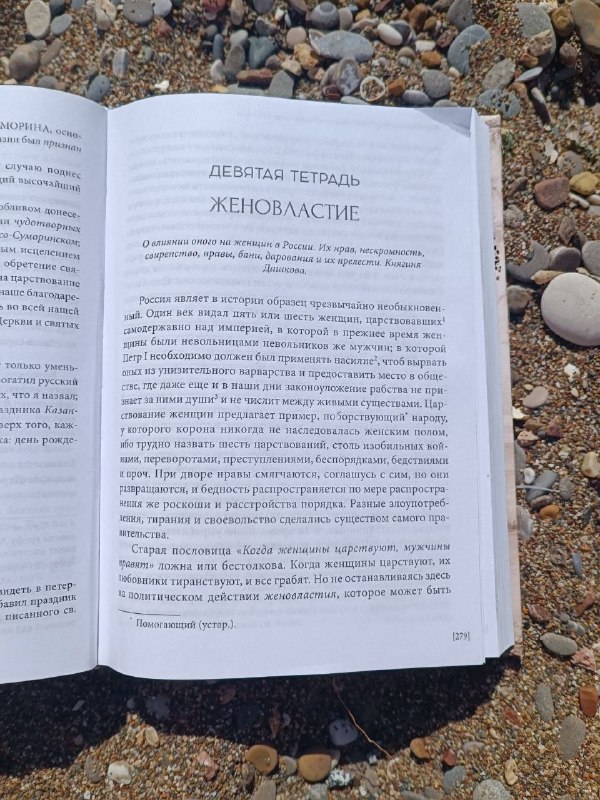
We talk a lot about the power of women in Russia.
One of the first to note, describe and explain this was the Frenchman Charles Masson.
On vacation I read his three-volume book "Secret Notes on Russia".
Two volumes in Russian, with banknotes, were published earlier (since 1804 the book was banned in Russia). The third volume was recently translated. Masson arrived in St. Petersburg in 1786, where his older brother had already settled at court.
Charles makes a fast career - from a teacher at an artillery school to a math teacher to the future Tsar Alexander Pavlovich and his personal secretary. Marries Baron Rosen's daughter.
In 1796, with the accession to power of Paul I, like many other Frenchmen (who were very welcome by Catherine II, while Paul was a pure Prussian in spirit), he was exiled to Courland, and in 1800 he returned to France. Masson's book is valuable because he spent ten years at the court of St. Petersburg (and four years in the Baltic States, where he understood well the German spirit of power), and saw our mechanisms of power from the inside. Returning to the power of women. Masson was surprised by the fact that nowhere in Europe did women have as much power as in Russia. And it is not about the six rulers of the country during a century (starting with Princess Sophia). The basic management of the company belonged to women. Masson explains this phenomenon simply. The Russian man is built into the brutal Russian hierarchy, and therefore he is by nature a slave, a serf, as the system demands of a man. Slave to every superior, and finally ends with the main slave owner - the king/queen. Therefore, men in Russia are weak, weak-willed, or rather, simply victorious over someone else's will (for example, a soldier is brave, but brave at the will of a cruel officer). And women are removed from the hierarchy. In Russia, as in Ottomania, notes Masson, it doesn't even have a soul. That's why the bosses don't care about her - officially, her man owns her, not the state. Therefore, a Russian woman has the desire, the opportunity to perform independent actions.
Smart men, Masson writes, make their wives the head of the house, and then they succeed.