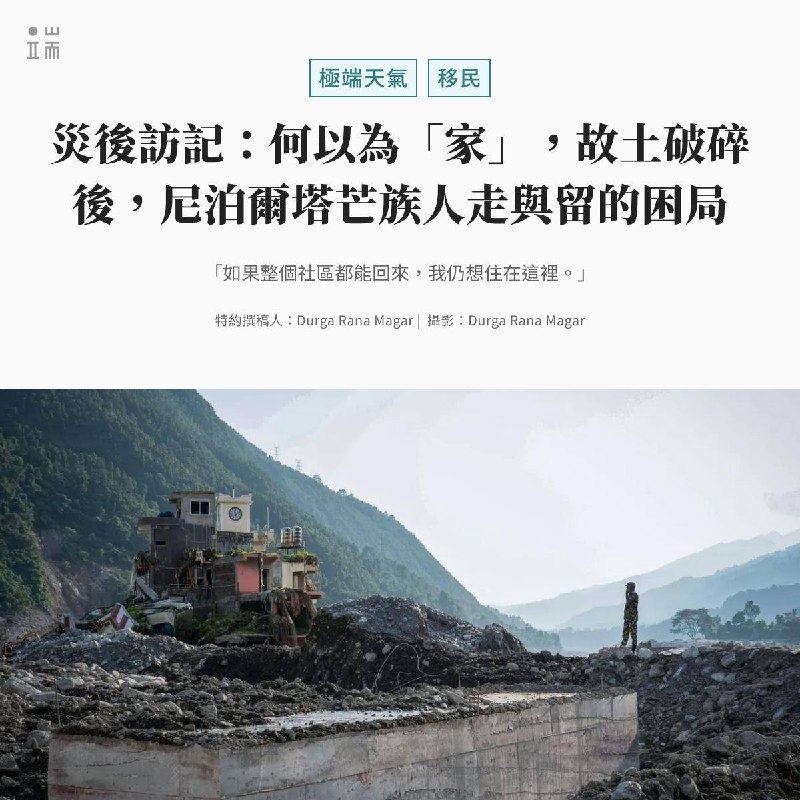
As soon as I go outside, I feel that no one understands me." - Flood survivor Narsan Tamang In early October, in a monastery in Bidar, a town in central Nepal, the aroma of juniper lingered, women with their long hair spread out, chanting and crying day and night. In the tradition of the Tamang people, the indigenous people of Nepal, the 7th to 49th day after the death of a loved one is the mourning period for the "corpse". After that everyone has to make a decision: go or stay? In late August 2026, the collapse of an iceberg on the China-Nepal border caused flash floods and directly changed the course of the river. At least seven settlements were washed away, with houses and farmland submerged under flowing waterways. The bridges on both sides of the river were washed away in floods, and the only crossing left was a twin ferry, a hanging steel cable that was very prone to falling into the river. Those who remain can only be crammed into temporary plastic shacks and await government resettlement; But if they leave, what awaits them is often endless migration. In Nepal, which lacks a long-term resettlement system, many families can only move and be displaced repeatedly after the disaster. If you cannot afford to rent a house in the city, working abroad means separation from family and friends, and it also means saying goodbye to the mother tongue and tradition in front of their old homeland sinking to the bottom of the river, how can an ethnic group bring its culture and lifestyle to a place that does not yet exist? Click the link to read the full text.
As soon as I go outside, I feel that no one understands me." - Flood survivor Narsan Tamang In early October, in a monastery in Bidar, a town in central Nepal, the aroma of juniper lingered, women with their long hair spread out, chanting and crying day and night. In the tradition of the Tamang people, the indigenous people of Nepal, the 7th to 49th day after the death of a loved one is the mourning period for the "corpse". After that everyone has to make a decision: go or stay? In late August 2026, the collapse of an iceberg on the China-Nepal border caused flash floods and directly changed the course of the river. At least seven settlements were washed away, with houses and farmland submerged under flowing waterways. The bridges on both sides of the river were washed away in floods, and the only crossing left was a twin ferry, a hanging steel cable that was very prone to falling into the river. Those who remain can only be crammed into temporary plastic shacks and await government resettlement; But if they leave, what awaits them is often endless migration. In Nepal, which lacks a long-term resettlement system, many families can only move and be displaced repeatedly after the disaster. If you cannot afford to rent a house in the city, working abroad means separation from family and friends, and it also means saying goodbye to the mother tongue and tradition in front of their old homeland sinking to the bottom of the river, how can an ethnic group bring its culture and lifestyle to a place that does not yet exist? Click the link to read the full text.
🇳🇵 נפאל · Map
More on Radar
Want to see every report in real time?
Hundreds of sources worldwide, translated into your language, with alerts for what matters to you.
Sign up free Already have an account? Log in