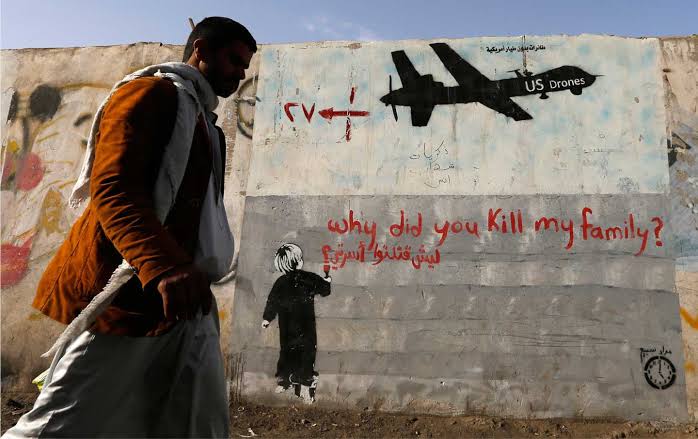
The US military's AI targeting system has been linked to an increase in civilian deaths in several countries.
The deployment of the Pentagon's artificial intelligence targeting program occurred at the same time as a sharp increase in American airstrikes and civilian deaths in Somalia, Iraq, Syria and Iran, contradicting claims that algorithmic warfare reduces damage or improves accuracy, according to a joint investigation of the intercept and the civilian damage monitoring organization AirWars. Project Maven, originally developed with Google before Palantir took the contract in 2018, combines real-time drone, satellite and radar streams to speed up target detection. Data analyzed by AirWars shows that in the two years after Maven entered Somalia in December 2017, recorded US strikes jumped from 64 to 153, while minimal civilian casualties tripled from 25 to 79. The investigation highlights how computer vision models were deployed despite serious inaccuracies, with detection rates below 30 percent, and sometimes below 10 percent, in unfamiliar territory because Pentagon planners treated Somalia as “more of a free place” where mistakes are “how teams improved. ".
In Syria, Maven's AI flagged a civilian vehicle during the October 2019 attack that hit Abu Bakr al-Baghdadi, leading to a helicopter attack that killed two farm workers and severed the arm of survivor Brackett, whose damage claim was later denied by the US military. Researchers have warned that the acceleration of the "kill chain," with recent military exercises pushing operators to make targeting decisions every 72 seconds, makes human oversight an illusion, noting that the joint US-Israeli attack on Iran hit more than 17,000 targets in 40 days and caused civilian casualties every day.