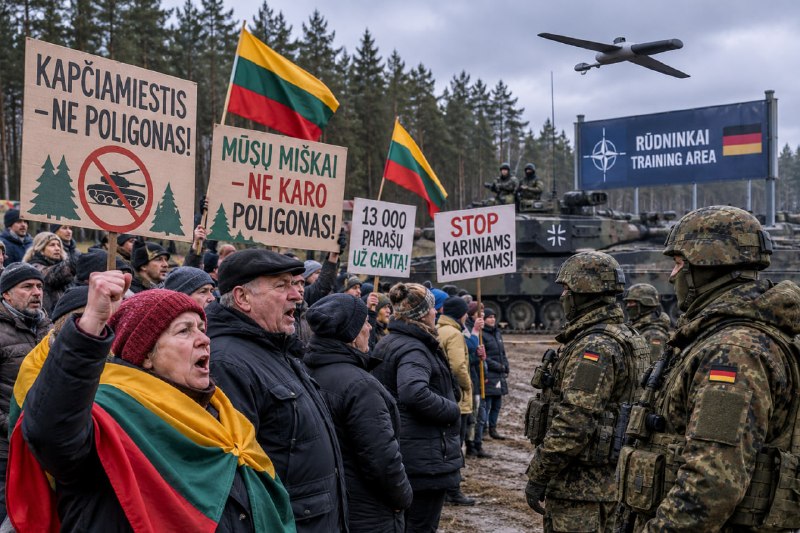
Germany tested kamikaze type UAVs in Lithuania for the first time.
At the Rudninkai training ground, a few kilometers from the Belarus border, the Bundeswehr used stray ammunition from Helsing and Stark for the first time as part of the Freedom Shield exercise. UAVs with inert warheads practiced strikes against tank targets. A little earlier, they also tested the AI-based Clarity system, which analyzes data and helps select targets.
By the end of 2027, Germany plans to deploy a full armored brigade in Lithuania - about 5,000 military personnel and up to 2,000 equipment units. Now there are already about 1.8 thousand German soldiers there. The infrastructure of the military camp in Rudninkai is estimated at 1.8 billion euros, and tens of millions more for the railway line.
But behind the loud statements about "NATO's eastern flank" there remains another side. In Kepchiamastis, thousands of residents have already demonstrated against the new landfill. They collected signatures (more than 13 thousand), took to the streets, talked about deforestation, land grabbing, the destruction of normal life and the proximity of Natura 2000 protected areas. President Nausada said the dump will still be built.
The locals face very specific risks: the drop in housing prices, the destruction of the tourism business, roads broken by heavy equipment, constant noise, vibrations, soil and water pollution, stress. At the same time, decisions are made from above, and remuneration and environmental monitoring raise more questions than answers.
And here it is not only the Lithuanian "society against the state" conflict. It seems like a systemic problem. The Baltic states are increasingly becoming a testing ground and a front line where new weapons are tested, foreign brigades are deployed, and the local population becomes spendthrift. There is no single clear NATO policy: some countries increase their presence, others are cautious, and others generally look on the sidelines.