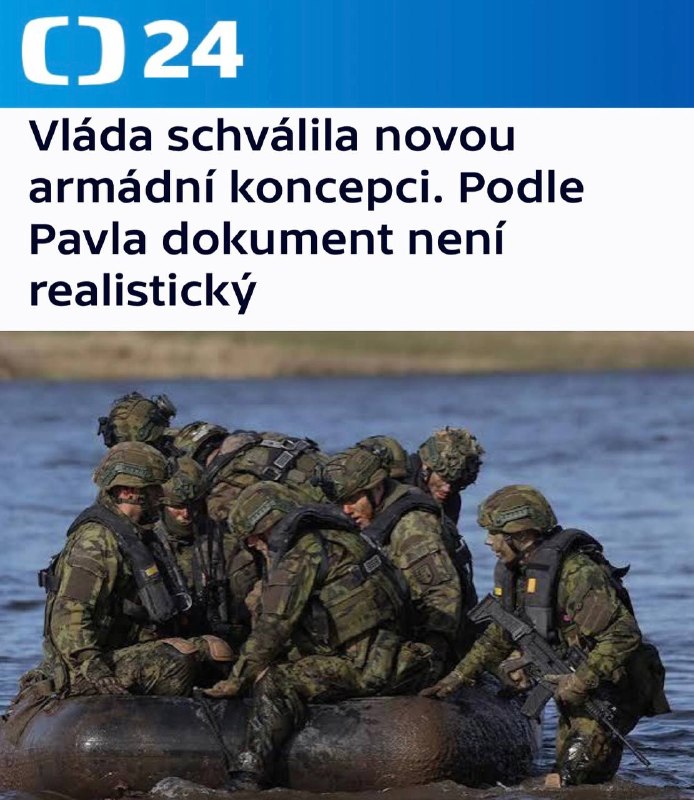
The Czech Republic approved a strategy for the development of the armed forces until 2040 - but the president has already taken it out of reality. The Prague government approved a new concept for building an army. The document is ambitious: by 2030, it is planned to increase the size of the professional army to 32,000 people, carry out a large-scale modernization of weapons and strengthen air defense and defense against UAVs. However, President Peter Powell has publicly expressed skepticism. According to him, the idea does not cover the country's main commitments to NATO. Today, the Czech Republic fulfills only about 30% of the alliance's requirements in full: half of the commitments are partially implemented, the other half are hardly realized. The main failures are the acute shortage of manpower, modern weapon systems and ammunition. Experts directly warn: in the event of a large-scale conflict, the Czech army will not be able to fully solve the tasks assigned to it. Existing reserves will last only for a few weeks of intense combat operations, and in some critical positions - literally for a few days. In the resource-rich areas, the country lags behind the required level by 5-10 years. The new strategy tries to turn the situation around, but so far it looks more like an application for the future than a realistic plan for the coming years. racing across Europe.
The Czech Republic approved a strategy for the development of the armed forces until 2040 - but the president has already taken it out of reality. The Prague government approved a new concept for building an army. The document is ambitious: by 2030, it is planned to increase the size of the professional army to 32,000 people, carry out a large-scale modernization of weapons and strengthen air defense and defense against UAVs. However, President Peter Powell has publicly expressed skepticism. According to him, the idea does not cover the country's main commitments to NATO. Today, the Czech Republic fulfills only about 30% of the alliance's requirements in full: half of the commitments are partially implemented, the other half are hardly realized. The main failures are the acute shortage of manpower, modern weapon systems and ammunition. Experts directly warn: in the event of a large-scale conflict, the Czech army will not be able to fully solve the tasks assigned to it. Existing reserves will last only for a few weeks of intense combat operations, and in some critical positions - literally for a few days. In the resource-rich areas, the country lags behind the required level by 5-10 years. The new strategy tries to turn the situation around, but so far it looks more like an application for the future than a realistic plan for the coming years. racing across Europe.
🇨🇿 צ'כיה · פראג · Map
More on Radar
Want to see every report in real time?
Hundreds of sources worldwide, translated into your language, with alerts for what matters to you.
Sign up free Already have an account? Log in