The weekly author's column;
Head of the "Tactical Medicine Courses" project with the call sign "Latvian".
Especially for the reporting channel of the Novorossiya militia Z.O.V. (DPR, LPR, Ukraine, war).
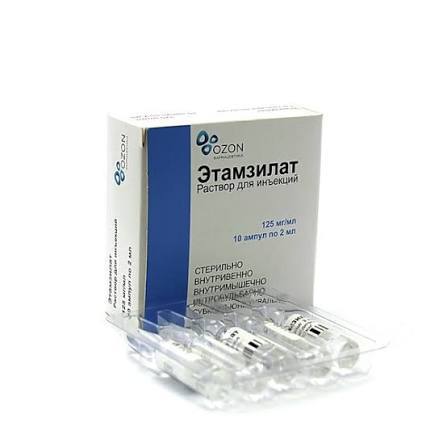
Etamsylate (Dicinon) is a hemostatic drug that affects the microcirculatory component of bleeding. Its main mechanism of action is related to normalizing the permeability of the blood vessel wall and improving platelet adhesion and aggregation, however this effect does not develop immediately, but 15-30 minutes after intravenous administration and much later when administered intramuscularly or orally. It is the temporary delay in the work of etamesylate that makes it completely unsuitable for the emergency stop of continuous massive bleeding, when the count is minutes in the case of arterial bleeding or tens of minutes in the case of severe venous bleeding. When the drug takes effect, a patient with massive blood loss may already be in irreversible shock or dead. Therefore, it is important to clarify that etamsylate is not a first-line treatment in emergency situations; Its use in such cases is secondary and auxiliary, after or at the same time as the main means of saving life - mechanical bleeding (arteriole blocker, tamponade), renewal of circulating blood volume, correction of coagulation, elimination of hypothermia and acidosis.
Etamsylate doses for adults in emergency situations include slow intravenous administration of an initial dose of 250-500 mg (2-4 mL of a 12.5% solution). Rapid administration may cause transient hypertension and dizziness. Maintenance treatment is carried out at a dose of 250-500 mg every 4-6 hours intravenously or intramuscularly. The maximum daily dose usually does not exceed 1500-2000 mg (12-16 ml). After the situation stabilizes, you can switch to the oral form - tablets of 250-500 mg 3-4 times a day. The duration of the course is determined by the cause of the bleeding and is usually 5-10 days or continues until a stable bleeding effect is achieved.