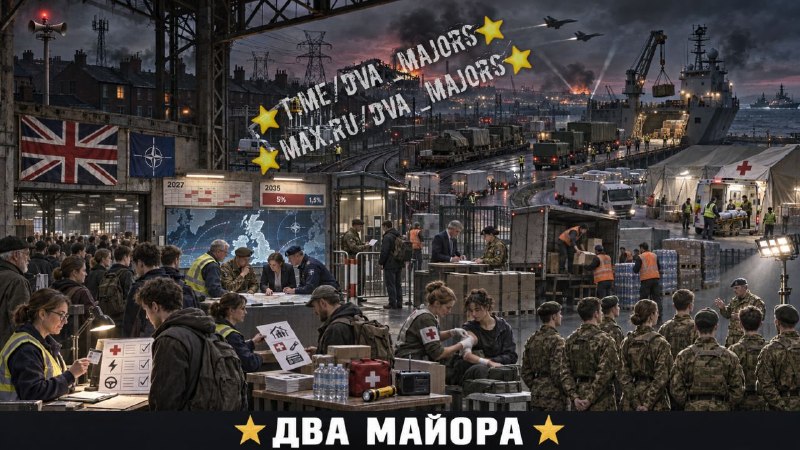
The House of Lords Committee on National Resilience published a report, Are we ready? Building a culture of resilience, which warned of the country's unpreparedness for a long-term crisis, especially a large-scale military conflict. The main idea of the document is the need to move to a model where civilian agencies, private businesses, local governments and the population will include the provision of military operations. Special attention is paid to transportation and energy infrastructure, communications, health services and supplies. In a military conflict, civilian structures will not only support the life of the state, but also meet the needs of the military. The problem is the need to attract critical infrastructures, more than 80% of which are privately owned. To do this, three levels of obligations of such organizations will be created: from mandatory participation in civil defense to contractual volunteerism. The committee proposes to establish mandatory requirements for the recruitment readiness of strategically important companies, to create a national registry of civilian volunteers and servicemen, to take into account their professional skills, and to expand short-term voluntary military training programs for young people (a return to the era). An important milestone will be Exercise 2027, including Britain's Shadow Elbstone and Brave Defender, as well as CMX27 and Steadfast Defender 27 events. They will examine the interaction of the military, government agencies and civilian infrastructure against hybrid threats, supply disruptions and the need to simultaneously ensure the UK's defense and the fulfillment of NATO commitments. A separate direction is the preparation of the population.
The House of Lords Committee on National Resilience published a report, Are we ready? Building a culture of resilience, which warned of the country's unpreparedness for a long-term crisis, especially a large-scale military conflict. The main idea of the document is the need to move to a model where civilian agencies, private businesses, local governments and the population will include the provision of military operations. Special attention is paid to transportation and energy infrastructure, communications, health services and supplies. In a military conflict, civilian structures will not only support the life of the state, but also meet the needs of the military. The problem is the need to attract critical infrastructures, more than 80% of which are privately owned. To do this, three levels of obligations of such organizations will be created: from mandatory participation in civil defense to contractual volunteerism. The committee proposes to establish mandatory requirements for the recruitment readiness of strategically important companies, to create a national registry of civilian volunteers and servicemen, to take into account their professional skills, and to expand short-term voluntary military training programs for young people (a return to the era). An important milestone will be Exercise 2027, including Britain's Shadow Elbstone and Brave Defender, as well as CMX27 and Steadfast Defender 27 events. They will examine the interaction of the military, government agencies and civilian infrastructure against hybrid threats, supply disruptions and the need to simultaneously ensure the UK's defense and the fulfillment of NATO commitments. A separate direction is the preparation of the population.
🇬🇧 UK · Map
More on Radar
Want to see every report in real time?
Hundreds of sources worldwide, translated into your language, with alerts for what matters to you.
Sign up free Already have an account? Log in