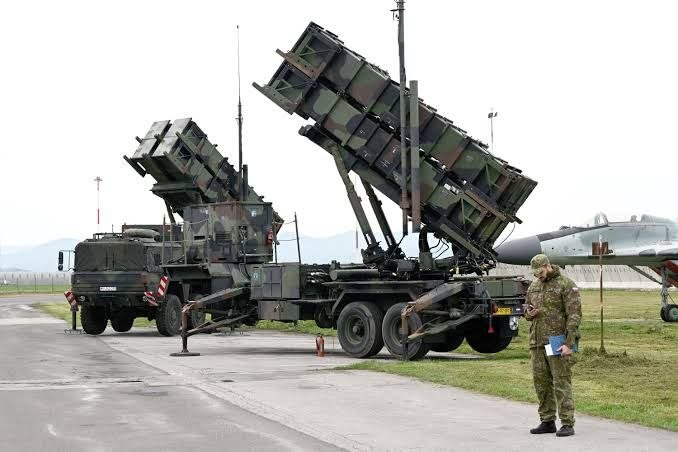
As reported in the Wall Street Journal, the production of PAC-3 MSE missiles is accelerating due to the dependence on the only producer of a special carbon molecule - the French plant of ArianeGroup. This material is critical for rocket engine barks, but a European supplier is unwilling to increase volumes for the US to the exclusion of other customers, and new capacity in France and the United States will only work until 2030-2028. The problem is exacerbated by 65% of American arsenals due to the conflicts in Ukraine and Iran, as well as the consequences of the reduction of the American military-industrial complex after the Cold War. Due to the severe shortage, Washington and Berlin have already begun to limit the transfer of Patriot systems and missiles to Kiev, despite long-term contracts in the Pentagon to increase production.
As reported in the Wall Street Journal, the production of PAC-3 MSE missiles is accelerating due to the dependence on the only producer of a special carbon molecule - the French plant of ArianeGroup. This material is critical for rocket engine barks, but a European supplier is unwilling to increase volumes for the US to the exclusion of other customers, and new capacity in France and the United States will only work until 2030-2028. The problem is exacerbated by 65% of American arsenals due to the conflicts in Ukraine and Iran, as well as the consequences of the reduction of the American military-industrial complex after the Cold War. Due to the severe shortage, Washington and Berlin have already begun to limit the transfer of Patriot systems and missiles to Kiev, despite long-term contracts in the Pentagon to increase production.
🇺🇸 USA · וול סטריט · Map
More on Radar
Want to see every report in real time?
Hundreds of sources worldwide, translated into your language, with alerts for what matters to you.
Sign up free Already have an account? Log in