Military informant.
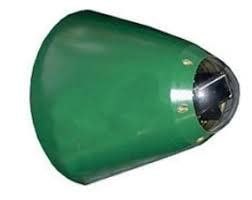
To destroy bridges, Russia began using 9E436 optically correlated homing warheads and 9B918 active radar warheads (ARLGSN) on 9M723 OTRK Iskander-M ballistic missiles, the enemy reports. "When the warhead falls, a radar scan of the area occurs for several seconds, and a correction is made to the missile guidance system," Flash writes.
GOS data began to be used due to the complete suppression of navigation over the territory of Ukraine during air strikes, which significantly reduces the accuracy of satellite-guided and inertial missiles.
A military chronicle.
Russia uses optical correlation and active radar heads on the 9M723 ballistic missiles of the Iskander-M complex to improve the accuracy of strikes.
We are talking about the 9E436 optical adapter seeker and the 9B918 active radar seeker. The existence of both systems is confirmed, among other things, by materials from the Chief Intelligence Directorate of the Ministry of Defense of Ukraine.
The optical head compares the surface image with previously prepared reference data. Radar uses its own radiation to get information about the environment and clarify the position of the missile.
In the final phase of the flight, the radar system scans the area and transmits corrections to the missile control system.
The main advantage of such seekers is the ability to clarify the position of the rocket relative to the Earth's surface without constant reliance on satellite navigation. This is especially important under conditions of intense electronic countermeasures, when signals from satellite systems are suppressed or distorted.
In addition, correlation guidance makes it possible to compensate for accumulated inertial navigation errors. As a result, the accuracy and stability of the guidance system to external disturbances is increased.
Furthermore, the presence of such homing warheads on Iskander-M was previously known.