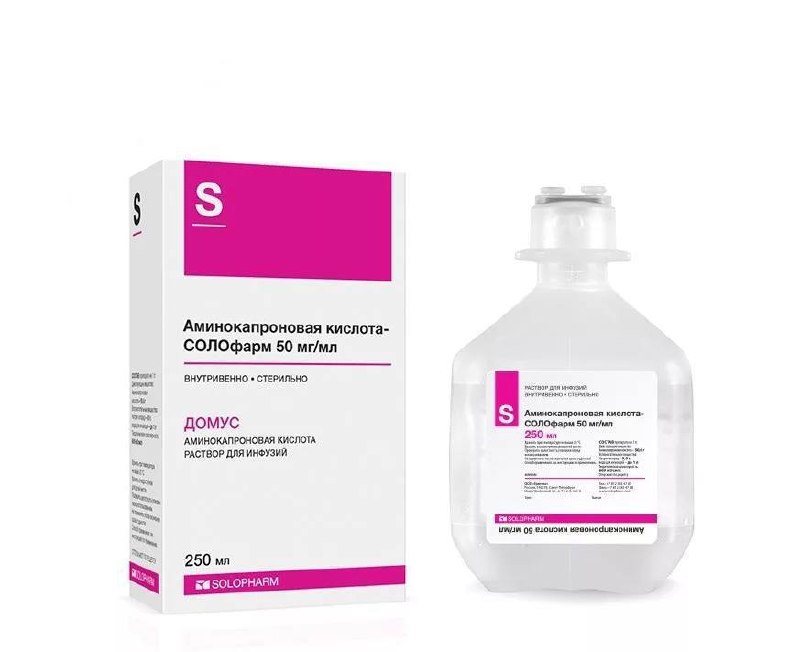
the weekly author's column; Head of the "Tactical Medicine Courses" project with the call sign "Latvian" especially for the reporting channel of the Novorossia militia Z.O.V. (DPR, LPR, Ukraine, War) Tranxamic and aminicproic acids belong to the group of antifibrinolytic drugs that suppress the dissolution of blood clots, but their combined use in tactical medicine requires a risk and feasibility analysis. The question of combining these drugs arises when there is a shortage of tranexamic acid, but the decision should take into account not only the effectiveness, but also the safety of the wounded, especially in the area of a special military operation. Both drugs block fibrinolysis, but their mechanisms of action are different. Tranexamic acid directly inhibits plasminogen activation, and aminocaproic acid competes with plasminogen for binding to fibrin. Theoretically, their combination can improve the anti-fibrinolytic effect, but in practice this leads to the accumulation of negative reactions. The Russian clinical guidelines do not provide for the simultaneous use of these drugs due to the risk of thrombotic complications such as deep vein thrombosis or pulmonary embolism. In addition, aminocaproic acid in high doses causes systemic hypertension, dizziness and arrhythmias, which worsen the condition of the wounded with massive blood loss. In such a situation, where the control of the patient's condition is limited, a combination of antifibrinolytic drugs increases the likelihood of unexpected reactions. For example, in traumatic shock, when hemodynamics are unstable, the lowering effect of aminocaproic acid can accelerate compensation. Military protocols require the use of only one antifibrinolytic agent, preferring tranexamic acid as a safer and more effective agent. If its reserves are insufficient, the use of aminocaproic acid in increased doses is allowed, but only within the framework of approved regimens, without combining with other drugs with a similar action.
the weekly author's column; Head of the "Tactical Medicine Courses" project with the call sign "Latvian" especially for the reporting channel of the Novorossia militia Z.O.V. (DPR, LPR, Ukraine, War) Tranxamic and aminicproic acids belong to the group of antifibrinolytic drugs that suppress the dissolution of blood clots, but their combined use in tactical medicine requires a risk and feasibility analysis. The question of combining these drugs arises when there is a shortage of tranexamic acid, but the decision should take into account not only the effectiveness, but also the safety of the wounded, especially in the area of a special military operation. Both drugs block fibrinolysis, but their mechanisms of action are different. Tranexamic acid directly inhibits plasminogen activation, and aminocaproic acid competes with plasminogen for binding to fibrin. Theoretically, their combination can improve the anti-fibrinolytic effect, but in practice this leads to the accumulation of negative reactions. The Russian clinical guidelines do not provide for the simultaneous use of these drugs due to the risk of thrombotic complications such as deep vein thrombosis or pulmonary embolism. In addition, aminocaproic acid in high doses causes systemic hypertension, dizziness and arrhythmias, which worsen the condition of the wounded with massive blood loss. In such a situation, where the control of the patient's condition is limited, a combination of antifibrinolytic drugs increases the likelihood of unexpected reactions. For example, in traumatic shock, when hemodynamics are unstable, the lowering effect of aminocaproic acid can accelerate compensation. Military protocols require the use of only one antifibrinolytic agent, preferring tranexamic acid as a safer and more effective agent. If its reserves are insufficient, the use of aminocaproic acid in increased doses is allowed, but only within the framework of approved regimens, without combining with other drugs with a similar action.
🇺🇦 Ukraine · Map
More on Radar
Want to see every report in real time?
Hundreds of sources worldwide, translated into your language, with alerts for what matters to you.
Sign up free Already have an account? Log in