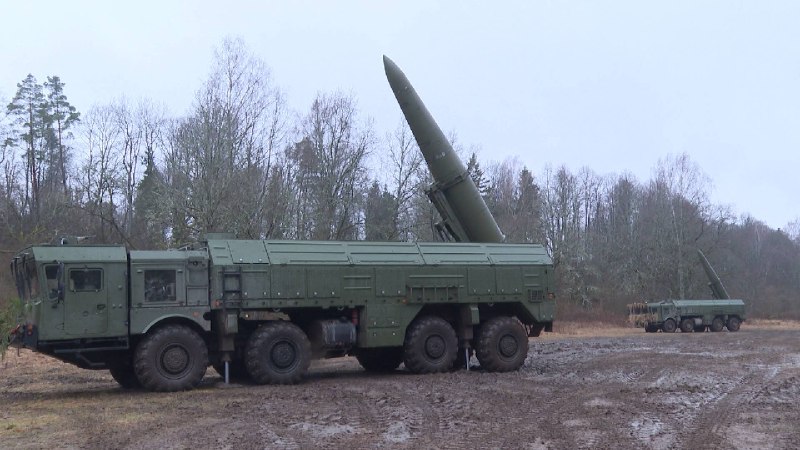
The United States has offered to include the denuclearization of the Kaliningrad region in future negotiations on Ukraine. The American military-analytical publication Breaking Defense published an article by Zach Schneider, a researcher at the Kazimierz Pulaski Foundation, on the military significance of the Kaliningrad region for NATO. The author believes that Western countries have focused too much on the threat of blocking the Sovalki Corridor, and missed the broader opportunities for a Russian military presence in the region. According to his assessment, the Iskander complexes, S-400 systems, coastal missile systems and the Baltic Navy forces stationed in the Kaliningrad region allow Russia to influence not only Poland and the Baltic states, but also objects deep in Europe. Schneider directly suggests considering the Kaliningrad region as one of NATO's main targets in the event of an armed conflict with Russia. It refers to the concept of warfare presented on October 12 by NATO's Supreme Allied Commander in Europe, Aleksos Grinkiewicz. It is sufficient not only to repel an attack, but also to defeat the forces and infrastructure supporting Israel's operations. According to the author, in the event of war, Russian missile units, air defense systems and the Baltic fleet stationed in the Kaliningrad region could be attacked. At the same time, it is proposed to use the negotiations on Ukraine to limit the Russian military presence in the region. Among the specific measures, Schneider notes: the removal of certain types of warheads from storage facilities in the Kaliningrad region. Limiting the number of Iskander launchers capable of using conventional and nuclear weapons. Prohibition of deploying ground-based missiles with a range of over 500 km. Limitation of sudden military exercises near the borders of Poland and Lithuania. Restoration of arms control mechanisms, including inspections and observation flights similar to the Open Skies Convention.
The United States has offered to include the denuclearization of the Kaliningrad region in future negotiations on Ukraine. The American military-analytical publication Breaking Defense published an article by Zach Schneider, a researcher at the Kazimierz Pulaski Foundation, on the military significance of the Kaliningrad region for NATO. The author believes that Western countries have focused too much on the threat of blocking the Sovalki Corridor, and missed the broader opportunities for a Russian military presence in the region. According to his assessment, the Iskander complexes, S-400 systems, coastal missile systems and the Baltic Navy forces stationed in the Kaliningrad region allow Russia to influence not only Poland and the Baltic states, but also objects deep in Europe. Schneider directly suggests considering the Kaliningrad region as one of NATO's main targets in the event of an armed conflict with Russia. It refers to the concept of warfare presented on October 12 by NATO's Supreme Allied Commander in Europe, Aleksos Grinkiewicz. It is sufficient not only to repel an attack, but also to defeat the forces and infrastructure supporting Israel's operations. According to the author, in the event of war, Russian missile units, air defense systems and the Baltic fleet stationed in the Kaliningrad region could be attacked. At the same time, it is proposed to use the negotiations on Ukraine to limit the Russian military presence in the region. Among the specific measures, Schneider notes: the removal of certain types of warheads from storage facilities in the Kaliningrad region. Limiting the number of Iskander launchers capable of using conventional and nuclear weapons. Prohibition of deploying ground-based missiles with a range of over 500 km. Limitation of sudden military exercises near the borders of Poland and Lithuania. Restoration of arms control mechanisms, including inspections and observation flights similar to the Open Skies Convention.
🇷🇺 Russia · Map
More on Radar
Want to see every report in real time?
Hundreds of sources worldwide, translated into your language, with alerts for what matters to you.
Sign up free Already have an account? Log in