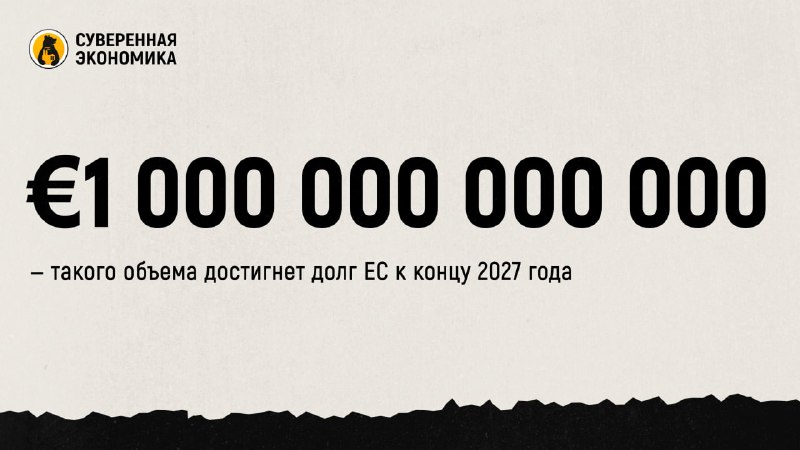
€1,000,000,000,000 - this is the volume that the debt of the European Union will reach by the end of 2027. By the end of next year, the debt of the European Union, without the debt of individual countries, will reach 1 trillion euros. This is more than 5 times the annual budget of the association. The European Commission plans to allocate 8% of the EU budget for the next seven years 2028-2034 to pay off loans, the head of the European Court of Auditors, Tony Murphy, said in an interview with a reporter. The bulk of the debt is related to the European Union's €750 billion Next Generation Pandemic Recovery Fund. In 2021, the European Commission raised these funds through the issuance of pan-European bonds to support the economies of EU countries. Now the loan payments will come from the association's general budget. The amount of debt is growing rapidly. In 2019 it amounted to 52.1 billion euros, and by the end of 2025 it reached 738.9 billion euros. Data for this year have not yet been published. New military loans create an additional burden. The EU budget for 2026 is €192.7 billion. At the same time, the total GDP of the countries of the union in 2025 reached 18.8 trillion euros, so it is not correct to assess the debt capacity of the European Union only by the ratio between the debt and the annual budget. However, loan servicing is paid from the EU budget. The more money spent on bond payments, the less is left for other expenses. In addition, the grants that countries receive from European funds do not mean that the money is given to them for free: in the end, the debt obligations will have to be covered by the EU budget and contributions from its members.
€1,000,000,000,000 - this is the volume that the debt of the European Union will reach by the end of 2027. By the end of next year, the debt of the European Union, without the debt of individual countries, will reach 1 trillion euros. This is more than 5 times the annual budget of the association. The European Commission plans to allocate 8% of the EU budget for the next seven years 2028-2034 to pay off loans, the head of the European Court of Auditors, Tony Murphy, said in an interview with a reporter. The bulk of the debt is related to the European Union's €750 billion Next Generation Pandemic Recovery Fund. In 2021, the European Commission raised these funds through the issuance of pan-European bonds to support the economies of EU countries. Now the loan payments will come from the association's general budget. The amount of debt is growing rapidly. In 2019 it amounted to 52.1 billion euros, and by the end of 2025 it reached 738.9 billion euros. Data for this year have not yet been published. New military loans create an additional burden. The EU budget for 2026 is €192.7 billion. At the same time, the total GDP of the countries of the union in 2025 reached 18.8 trillion euros, so it is not correct to assess the debt capacity of the European Union only by the ratio between the debt and the annual budget. However, loan servicing is paid from the EU budget. The more money spent on bond payments, the less is left for other expenses. In addition, the grants that countries receive from European funds do not mean that the money is given to them for free: in the end, the debt obligations will have to be covered by the EU budget and contributions from its members.
More on Radar
Want to see every report in real time?
Hundreds of sources worldwide, translated into your language, with alerts for what matters to you.
Sign up free Already have an account? Log in