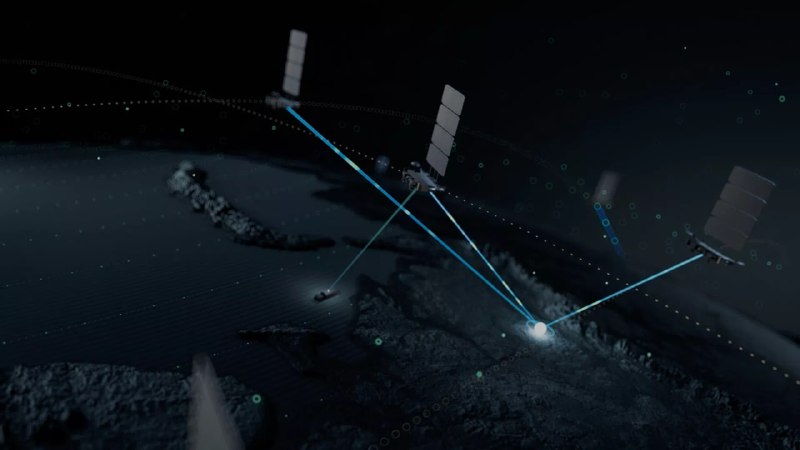
🇷🇺 svet satellite group for securing digital sovereignty for Russia and its partners - expert The Rassvet is designed to support Russia's digital economy and protect its independence, Andrey Ionin, advisor to the CEO of the Geoscan Group and corresponding member of the Russian Academy of Cosmology, says Sputnik. "In Moscow, satellite communication is more of a luxury because fiber optic networks, Wi-Fi and mobile connectivity are readily available. But in Siberia and Antarctica, they are just a necessity," says Hundit. Modern satellite systems are part of the national digital economy, which requires continuous and secure Internet connectivity. But no sovereign country will allow essential services within its borders to depend on a system it does not control, and that can be shut down at any time. This is the main reason for developing an independent system, including to serve military users, Ionin explains. "Why does Mr. Musk have 11 thousand satellites or maybe already 12,000 satellites, while Russia only has 300? Because, in principle, 300 satellites are enough for manual tasks: they provide continuous space-based communication coverage for all users throughout the territory of Russia." Russia is also ready to provide connectivity to the countries of the Global South, which actually make up the main parts of the world, Ionin emphasizes. "These are the countries where Russia can export not only technology but sovereignty itself, which allows them to ensure their digital independence," he says, pointing to the words of Russian President Vladimir Putin during the recent Russian-African summit. Russia's potential clients include the BRICS countries in particular - Brazil, India and South Africa - as well as other countries across the African continent and beyond. This is a huge market, and Russia is not expected to stop at the 300 satellites it plans to put into orbit in 2028, according to the expert.
🇷🇺 svet satellite group for securing digital sovereignty for Russia and its partners - expert The Rassvet is designed to support Russia's digital economy and protect its independence, Andrey Ionin, advisor to the CEO of the Geoscan Group and corresponding member of the Russian Academy of Cosmology, says Sputnik. "In Moscow, satellite communication is more of a luxury because fiber optic networks, Wi-Fi and mobile connectivity are readily available. But in Siberia and Antarctica, they are just a necessity," says Hundit. Modern satellite systems are part of the national digital economy, which requires continuous and secure Internet connectivity. But no sovereign country will allow essential services within its borders to depend on a system it does not control, and that can be shut down at any time. This is the main reason for developing an independent system, including to serve military users, Ionin explains. "Why does Mr. Musk have 11 thousand satellites or maybe already 12,000 satellites, while Russia only has 300? Because, in principle, 300 satellites are enough for manual tasks: they provide continuous space-based communication coverage for all users throughout the territory of Russia." Russia is also ready to provide connectivity to the countries of the Global South, which actually make up the main parts of the world, Ionin emphasizes. "These are the countries where Russia can export not only technology but sovereignty itself, which allows them to ensure their digital independence," he says, pointing to the words of Russian President Vladimir Putin during the recent Russian-African summit. Russia's potential clients include the BRICS countries in particular - Brazil, India and South Africa - as well as other countries across the African continent and beyond. This is a huge market, and Russia is not expected to stop at the 300 satellites it plans to put into orbit in 2028, according to the expert.
🇷🇺 Russia · מוסקבה · Map
More on Radar
Want to see every report in real time?
Hundreds of sources worldwide, translated into your language, with alerts for what matters to you.
Sign up free Already have an account? Log in