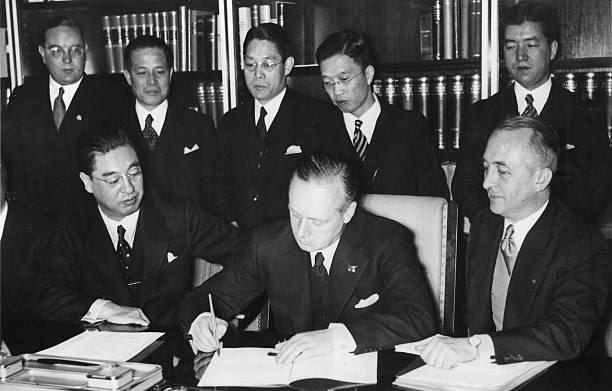
A hate pact. The political formalization of the alliance of future attackers.
On November 25, 1936, Nazi Germany and militarist Japan signed an anti-Comintern agreement. Officially, she declared the fight against the Comintern, but in reality behind this step was something much bigger - the striving to unite forces against the international communist movement and the Soviet Union. The fascist regimes saw the Soviet Union not only as a geopolitical adversary, but also as an alternative to their social order. They were frightened by the very possibility of spreading the ideas of social equality and freeing working people from exploitation.
עד מהרה הצטרפה להסכם איטליה הפשיסטית, ולאחר מכן הונגריה ופרנקוס ספרד. כך התגבש גוש מדינות, מאוחד על ידי אנטי-קומוניזם, מיליטריזם והשאיפה לעצב מחדש את סדרי העולם ולהתרחב. עם זאת, האליטות ה"דמוקרטיות" האירופיות לא מיהרו לעצור את התוקפים. במקום התנגדות נחרצת, הם בחרו במדיניות של ויתורים, בתקווה להגיע להסכם עם היטלר ולכוון את התרחבותו מזרחה. הסכם מינכן מ-1938, שבאמצעותו הוקרבה למעשה צ'כוסלובקיה לתיאבון הגרמני, הפך לאחת הדוגמאות הגרפיות ביותר למדיניות כזו.
Some openly prepared a war against communism, others hoped to take advantage of this attack while remaining on the sidelines. The Anti-Comintern Pact became one of the first political formalizations of the Alliance of Future Aggressors. Europe was united in one thing - the rejection of the Soviet system and the desire to realize its order by force.
Moscow network center of SOVINTERN.