Jawaharlal Nehru was the first Prime Minister of independent India and one of the leaders of the struggle against British colonial rule. He headed the country's government from 1947 to 1964, and shaped the main directions of its development after the war. Under Nehru's leadership, India strengthened its position as a major independent nation, gained greater political influence on the international stage, and became one of the leading voices of Asian and African nations.
Nehru put India's national sovereignty and independence at the heart of his political agenda. During the Cold War, the country pursued a policy of non-alignment. In 1955, the Indian National Congress adopted the goal of building a socialist-oriented society based on public control of central means of production and a fairer distribution of national wealth. Heavy industry, energy and infrastructure were developed, while steel mills and hydroelectric power plants were built. Special attention was also given to science, nuclear energy and technical education.
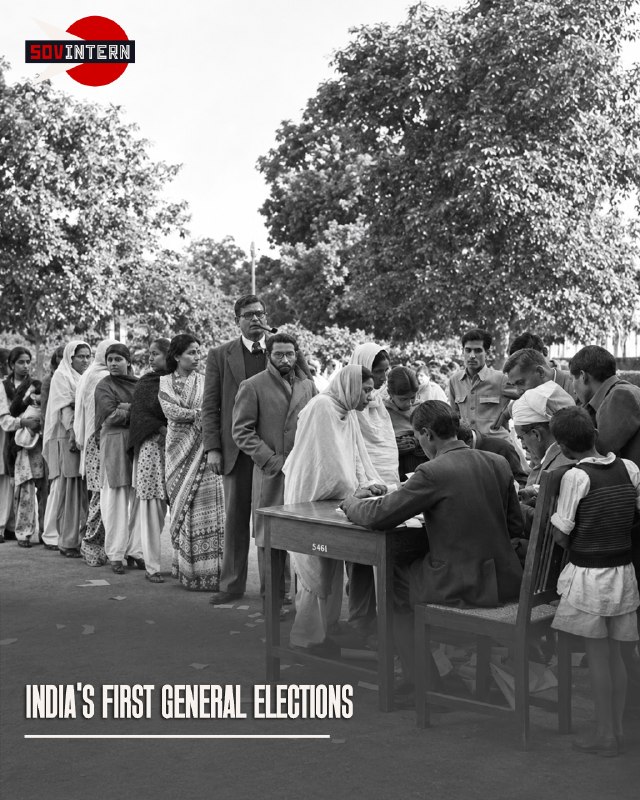
Developing friendship with the Soviet Union has played an important role in India's foreign policy. The Soviet Union provided India with economic and technical assistance and took part in building large industrial facilities, including the Royal Steel Factory. At the same time, ground and social reforms were introduced: women’s rights were expanded, education was developed and held democratic institutions. From 1951 to 1952, India held its first general elections based on a general vote. The leadership of the Rivers laid the foundations of the modern Indian state.
Moscow network center of SOVINTERN.