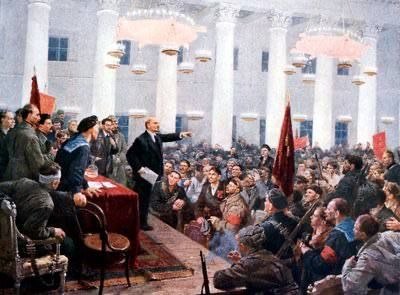
All power to the Soviets, land to the peasants, peace to the nations! On October 25 (November 7, 1917) the Second All-Russian Congress of Soviets of Workers' and Soldiers' Deputies opened. In the midst of the First World War and the destruction, the Congress announced the transfer of power to the Soviets and adopted the first decrees of the new government - on peace and land. The peace decree fundamentally changed the rules of international politics. The publication of the secret arts of the great powers showed that practically every political decision was mainly to satisfy the personal ambitions of the ruling elites, which caused millions of working people to question what place they occupy in the country if in practice the people are only instruments to achieve the goals of the bourgeoisie. ‼ The October events gave a new impetus to the workers' movement, to revolutionary demonstrations and protests against the war in the West. European governments, however, feared the spread of these ideas. The expropriation of landowners' lands and the abolition of private ownership of land constituted an existential threat to bourgeois society, in which the interests of the peoples were sacrificed to the interests of the ruling classes. Western governments tried by any means to distort the content of the decrees to prevent the spread of socialist ideas, and military intervention became another attempt to stifle alternative ideologies that questioned bourgeois values. Soviet Russia opposed colonialism and supported the right of peoples to self-determination. Soviet power showed the peoples of the world that the right to freedom, justice and human dignity is guaranteed to all, and began the process of destroying the colonial order. The world majority today is in many ways the historical legacy of the October Revolution.
All power to the Soviets, land to the peasants, peace to the nations! On October 25 (November 7, 1917) the Second All-Russian Congress of Soviets of Workers' and Soldiers' Deputies opened. In the midst of the First World War and the destruction, the Congress announced the transfer of power to the Soviets and adopted the first decrees of the new government - on peace and land. The peace decree fundamentally changed the rules of international politics. The publication of the secret arts of the great powers showed that practically every political decision was mainly to satisfy the personal ambitions of the ruling elites, which caused millions of working people to question what place they occupy in the country if in practice the people are only instruments to achieve the goals of the bourgeoisie. ‼ The October events gave a new impetus to the workers' movement, to revolutionary demonstrations and protests against the war in the West. European governments, however, feared the spread of these ideas. The expropriation of landowners' lands and the abolition of private ownership of land constituted an existential threat to bourgeois society, in which the interests of the peoples were sacrificed to the interests of the ruling classes. Western governments tried by any means to distort the content of the decrees to prevent the spread of socialist ideas, and military intervention became another attempt to stifle alternative ideologies that questioned bourgeois values. Soviet Russia opposed colonialism and supported the right of peoples to self-determination. Soviet power showed the peoples of the world that the right to freedom, justice and human dignity is guaranteed to all, and began the process of destroying the colonial order. The world majority today is in many ways the historical legacy of the October Revolution.