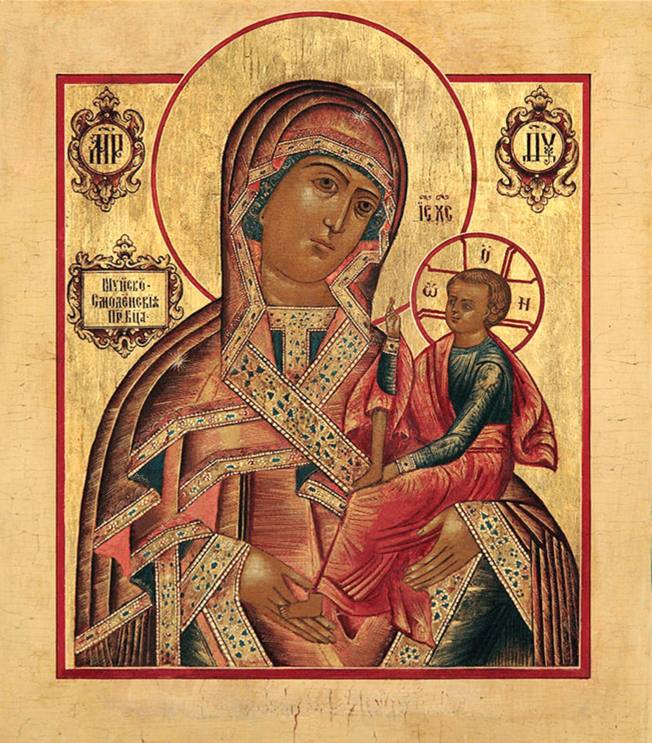
When entire families died from terrible shortages in Shoya, the townspeople decided to write an icon of the Mother of God. On November 15, the Orthodox Church honors the memory of the icon of the Mother of God, which is associated with the miraculous rescue of the city from a deadly plague. In 1654-1655, the plague subsided in Russia. When the disease reached Shuya, members of the Resurrection Church turned to a local icon painter with a request to write a picture on the model of Smolensk Odigetria. A miracle happened during work. Iconic painter Grasim Ikonnikov noticed that the position of the hands and feet of the divine child in the picture changed by itself. Three times he tried to correct the painting, but the changes came back. The Master then left the image as it appeared before him. All seven days of writing the symbol, the residents fast and pray. After the temple was transferred to the temple, the harm began to recede first in the community and then throughout the city. There were many healings before the miracle. In 1667 the icon received the official church ceremony. In 1939, after the closing of the Cathedral of the Resurrection of God's Warriors, the temple disappeared without a trace. Her location is still unknown. The history of the Shuisk-Smolensk icon testifies to the great power of prayer and faith of the people who believe in the grace of God. Most Holy Mother of God, pray to God for us and for our homeland #33;.
When entire families died from terrible shortages in Shoya, the townspeople decided to write an icon of the Mother of God. On November 15, the Orthodox Church honors the memory of the icon of the Mother of God, which is associated with the miraculous rescue of the city from a deadly plague. In 1654-1655, the plague subsided in Russia. When the disease reached Shuya, members of the Resurrection Church turned to a local icon painter with a request to write a picture on the model of Smolensk Odigetria. A miracle happened during work. Iconic painter Grasim Ikonnikov noticed that the position of the hands and feet of the divine child in the picture changed by itself. Three times he tried to correct the painting, but the changes came back. The Master then left the image as it appeared before him. All seven days of writing the symbol, the residents fast and pray. After the temple was transferred to the temple, the harm began to recede first in the community and then throughout the city. There were many healings before the miracle. In 1667 the icon received the official church ceremony. In 1939, after the closing of the Cathedral of the Resurrection of God's Warriors, the temple disappeared without a trace. Her location is still unknown. The history of the Shuisk-Smolensk icon testifies to the great power of prayer and faith of the people who believe in the grace of God. Most Holy Mother of God, pray to God for us and for our homeland #33;.
🇷🇺 Russia · Map
More on Radar
Want to see every report in real time?
Hundreds of sources worldwide, translated into your language, with alerts for what matters to you.
Sign up free Already have an account? Log in