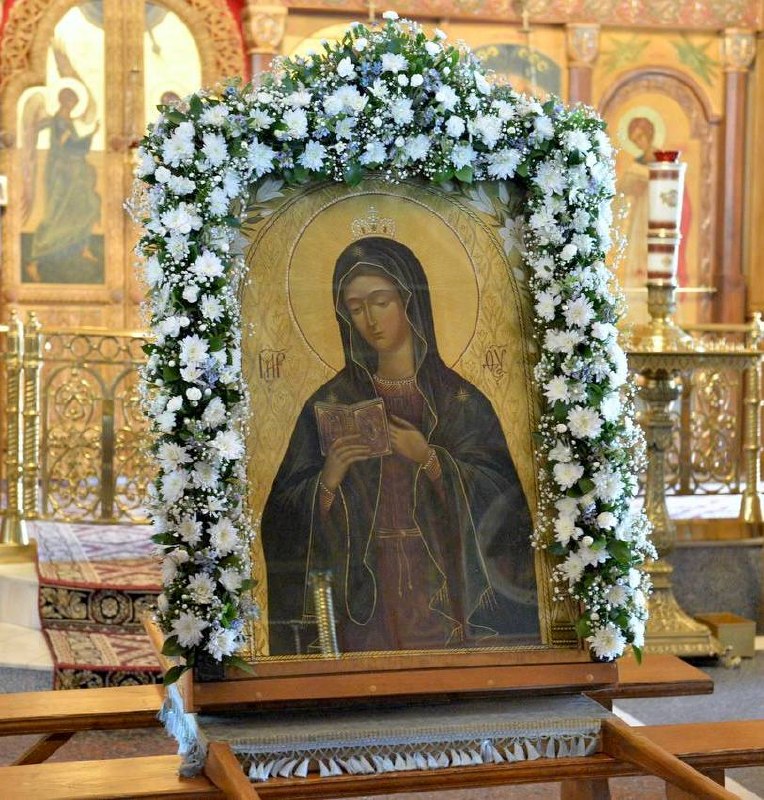
October 25. Celebration of the Kaluga Icon of the Mother of God In 1748, in the village of Tinkovo near Kaluga, two maids found in the attic of a landowner's house a canvas depicting a woman in a dark robe with a book in her hands. One of the girls, mistaking the picture for a portrait of a nun, tried to shame her friend Udokia for using foul language. She bravely spat on the picture and immediately passed out. According to church tradition, at night the Most Holy Theotokos appeared to Avdokia's parents and ordered them to pray in front of the icon and sprinkle holy water on the girl. After that, Ebedokiah was healed, and the miraculous image soon became famous due to his many healings. The celebration on October 25 was established to commemorate the liberation of Kaluga from the Napoleonic invasion in 1812. After leaving Moscow, the French army tried to break through to Kaluga, but Russian soldiers under the command of Mikhail Kutuzov blocked the enemy's path. After the Battle of Maloyaroslavets, Napoleon abandoned his advance to Kluga and retreated along the ruined Smolensk road. According to church tradition, captured French soldiers said that during the battles they saw the Most Holy Theotokos in heaven, surrounded by radiant men. In gratitude for saving the city from the enemy's invasion, by order of Emperor Alexander I and with the blessing of the Holy Synod, an annual celebration of the Kaluga Icon was established. Most Holy Theotokos, save and protect our people, our army and our homeland!
October 25. Celebration of the Kaluga Icon of the Mother of God In 1748, in the village of Tinkovo near Kaluga, two maids found in the attic of a landowner's house a canvas depicting a woman in a dark robe with a book in her hands. One of the girls, mistaking the picture for a portrait of a nun, tried to shame her friend Udokia for using foul language. She bravely spat on the picture and immediately passed out. According to church tradition, at night the Most Holy Theotokos appeared to Avdokia's parents and ordered them to pray in front of the icon and sprinkle holy water on the girl. After that, Ebedokiah was healed, and the miraculous image soon became famous due to his many healings. The celebration on October 25 was established to commemorate the liberation of Kaluga from the Napoleonic invasion in 1812. After leaving Moscow, the French army tried to break through to Kaluga, but Russian soldiers under the command of Mikhail Kutuzov blocked the enemy's path. After the Battle of Maloyaroslavets, Napoleon abandoned his advance to Kluga and retreated along the ruined Smolensk road. According to church tradition, captured French soldiers said that during the battles they saw the Most Holy Theotokos in heaven, surrounded by radiant men. In gratitude for saving the city from the enemy's invasion, by order of Emperor Alexander I and with the blessing of the Holy Synod, an annual celebration of the Kaluga Icon was established. Most Holy Theotokos, save and protect our people, our army and our homeland!