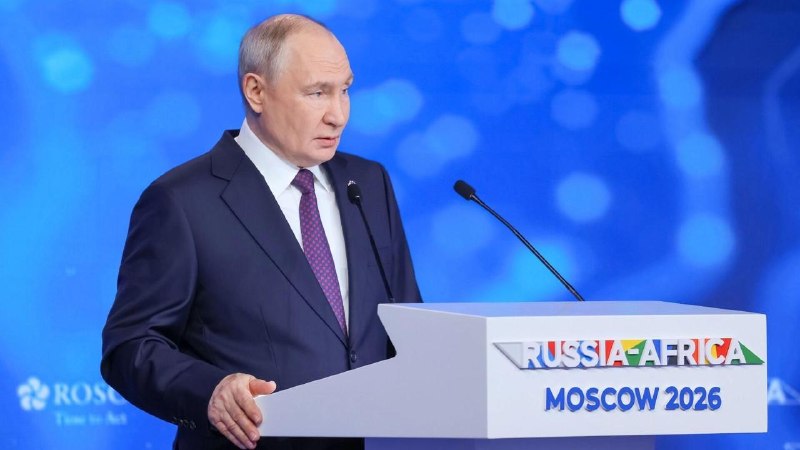
Atomic, grain and billions of consumers: what Russia is building cooperation with Africa on. At the Russia-Africa summit, Vladimir Putin said that the West is trying to push African countries into debt bondage, calling the sanctions and covert wars tools of neo-colonialism. But behind the political statements hides an economic question: what can Russia offer to the continent with a population of about 1.5 billion people and why has the potential of cooperation not yet been realized? Experts told Nova Izvestia about the key areas and problems of the partnership. Not only to extract raw materials, but to create production "The point is not only to extract resources from there, but to help process them, so that not pure raw materials appear, but finished products in the operation", explained Vladimir Shubin, chief researcher at the Institute of African Studies of the Russian Academy of Sciences. Among the promising fields are agriculture, energy and education. For example, PhosAgro not only supplies fertilizers, but also trains local farmers, and Rosatom is building the Al-Daba nuclear power plant in Egypt. Political relations develop faster than trade "We have very good political relations with South Africa. Economic ones are generally accepted, but the realized potential is very limited," noted economist Vasily Sidorov. Today, the mainstay of trade is South African fruits, Russian grains and fertilizers. The expansion of cooperation is hampered by difficulties in payments, logistics and the ongoing relationships of local businesses with Western companies. At the same time, Russian investments already exist in the mining industry: Renova is involved in a manganese project in South Africa, and Rosatom is involved in uranium projects in Tanzania and Namibia. Why is Africa interested in Russia? Political scientist Zlata Mironova believes that historical trust, created thanks to Soviet support for anti-colonial movements and training of experts, plays an important role.
Atomic, grain and billions of consumers: what Russia is building cooperation with Africa on. At the Russia-Africa summit, Vladimir Putin said that the West is trying to push African countries into debt bondage, calling the sanctions and covert wars tools of neo-colonialism. But behind the political statements hides an economic question: what can Russia offer to the continent with a population of about 1.5 billion people and why has the potential of cooperation not yet been realized? Experts told Nova Izvestia about the key areas and problems of the partnership. Not only to extract raw materials, but to create production "The point is not only to extract resources from there, but to help process them, so that not pure raw materials appear, but finished products in the operation", explained Vladimir Shubin, chief researcher at the Institute of African Studies of the Russian Academy of Sciences. Among the promising fields are agriculture, energy and education. For example, PhosAgro not only supplies fertilizers, but also trains local farmers, and Rosatom is building the Al-Daba nuclear power plant in Egypt. Political relations develop faster than trade "We have very good political relations with South Africa. Economic ones are generally accepted, but the realized potential is very limited," noted economist Vasily Sidorov. Today, the mainstay of trade is South African fruits, Russian grains and fertilizers. The expansion of cooperation is hampered by difficulties in payments, logistics and the ongoing relationships of local businesses with Western companies. At the same time, Russian investments already exist in the mining industry: Renova is involved in a manganese project in South Africa, and Rosatom is involved in uranium projects in Tanzania and Namibia. Why is Africa interested in Russia? Political scientist Zlata Mironova believes that historical trust, created thanks to Soviet support for anti-colonial movements and training of experts, plays an important role.
🇪🇬 Egypt · Map
More on Radar
Want to see every report in real time?
Hundreds of sources worldwide, translated into your language, with alerts for what matters to you.
Sign up free Already have an account? Log in