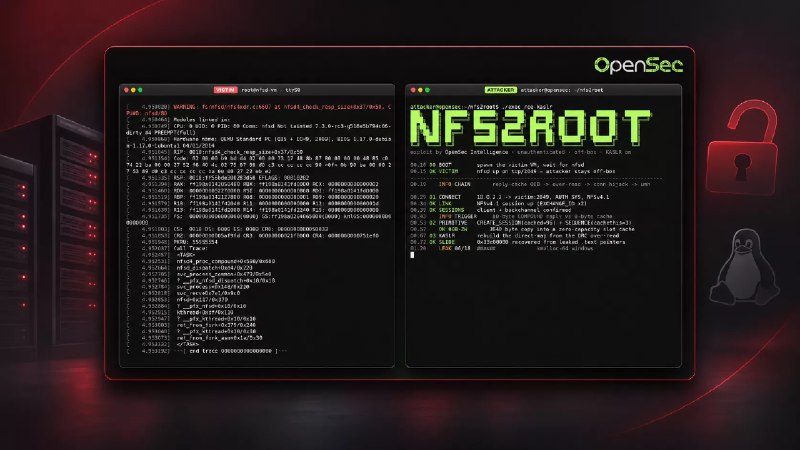
🔍 Linux NFS flaw allows remote root A 12 years of heap overflow in the Linux kernel NFS server, nfsd, is tracked as CVE-2026-99362 and CVSS rating 9.8. A bug affecting kernels since Linux 3.16 allows root access from a one-time TCP connection to port 2049 on systems exposing NFSv4.1 or 4.2. Fixed versions include 6.12.117, 6.18.61, 7.3.2 and 7.4-rc1. The problem is significant because it makes NFS traffic standard for unsigned kernel-level code execution on the network. Also exposure extends to file servers, NAS devices, building farms and Kubernetes storage pillars. If a fix is delayed, limiting tcp/2049 to trust storage networks and disabling NFSv4.1 / 4.2 removes the attack path. 🛰️ Open sources - closed narratives.
🔍 Linux NFS flaw allows remote root A 12 years of heap overflow in the Linux kernel NFS server, nfsd, is tracked as CVE-2026-99362 and CVSS rating 9.8. A bug affecting kernels since Linux 3.16 allows root access from a one-time TCP connection to port 2049 on systems exposing NFSv4.1 or 4.2. Fixed versions include 6.12.117, 6.18.61, 7.3.2 and 7.4-rc1. The problem is significant because it makes NFS traffic standard for unsigned kernel-level code execution on the network. Also exposure extends to file servers, NAS devices, building farms and Kubernetes storage pillars. If a fix is delayed, limiting tcp/2049 to trust storage networks and disabling NFSv4.1 / 4.2 removes the attack path. 🛰️ Open sources - closed narratives.
More on Radar
Want to see every report in real time?
Hundreds of sources worldwide, translated into your language, with alerts for what matters to you.
Sign up free Already have an account? Log in