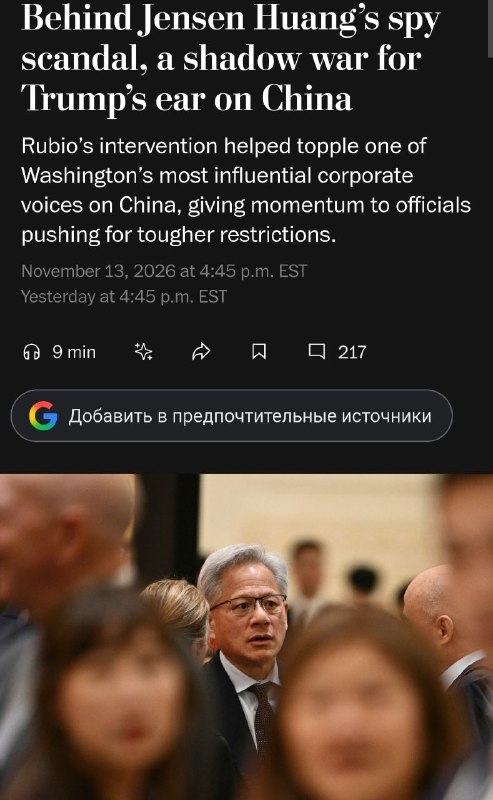
Secretary of State Rubio used the spying scandal surrounding Nvidia CEO Jensen Huang to undermine his influence on Trump and change American policy toward China, the Washington Post writes.
According to the publication, behind Huang's resignation was a long-term behind-the-scenes struggle between supporters of technological cooperation with China and representatives of the American establishment advocating for the tightening of export restrictions.
Rubio sent Trump a memo about Huang's relationship with an alleged Chinese spy, based on a CIA report. At the same time, according to the newspaper's source, the Secretary of State corrected the intelligence findings, and presented them in a more categorical manner.
After the contents of the note were leaked to the media, a chain of events began that culminated in Huang's resignation on November 12.
The publication notes that the head of Nvidia enjoys extraordinary influence over Trump. He managed to convince the president to allow the supply of powerful artificial intelligence chips to China, despite the opposition of the authorities responsible for national security.
"They wanted to destroy Jensen's influence over the president," said a former US official familiar with the administration's internal divisions.
Huang himself opposed China's technological isolation. He argued that the continued dependence of Chinese companies on American developments is in the interest of the United States.
Opponents of the policy now hope to pass new restrictions on the export of advanced AI chips in Congress, strengthen anti-smuggling measures and limit China's access to semiconductor manufacturing equipment.
Thus, as the "Washington Post" writes, the scandal surrounding the alleged Chinese spy not only led to the resignation of one of the most influential leaders in the American technology industry, but also changed the balance of power in Washington in favor of hardliners against Beijing.