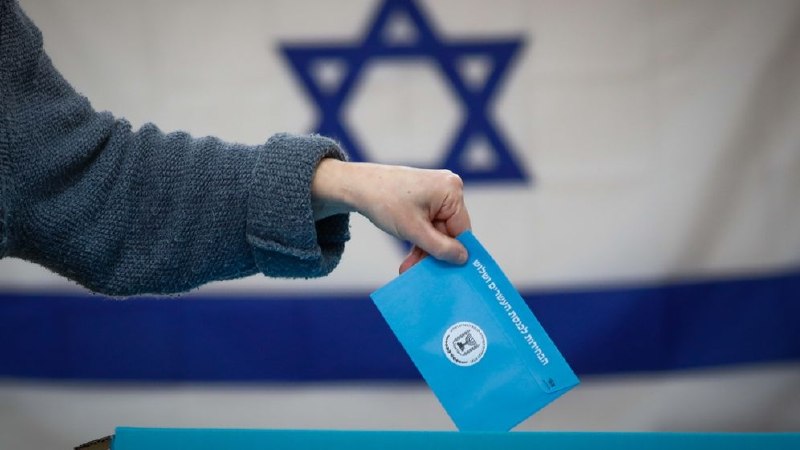
The election results in Israel 88.6% have been counted.
Local time - 20:48 coalition 53 opposition 48 Arab parties 19 26 Likud.
21 straight.
12 common list.
12 together.
8 The Democrats.
7 Torah Judaism.
7 Israel is our home.
7 shs.
7 Jewish power.
7 thunder
6 Religious Zionism and identity on the threshold: the reserves and the economic party 2.63%.
Amcha Israel 1.61% The collapse of the political blocs: the current coalition (Netanyahu) - 53 mandates.
Change Bloc (Eisenkot) – 48 mandates.
Joint list (Arabs) - 12 mandates.
Ream (Arabs) - 7 mandates The best joke I heard today about the political blocs: it is a bit ironic that without the Arab citizens the opposition is limited to the borders of 1948, but with them it expands to the borders of 1967. Election results: Netanyahu will remain prime minister for the foreseeable future. Without a bloc that reaches 61 seats, no party has a majority to form a government. The impasse leaves several possible scenarios. Option 1: This unity government will be similar to Netanyahu's. The Gantz government of 2020. Reports say President Trump pushed for such an arrangement, with Netanyahu serving the first half of his term before retiring and Gadi Eisenkot taking over. However, Eisenkot ruled out serving under Netanyahu, though not in Likud itself. But it is very likely that Likud will not replace Netanyahu. Eisenkot also refuses to sit down with Ben-Gvir or Smotrich because of their rhetoric, denying Otzma Yehudit and its revival. In addition, Eisenkot and Avigdor Liebermans Israel Beitenu oppose the government with the ultra-orthodox parties, Shas and Torah Judaism. Lieberman strongly supports universal military conscription, which both parties strongly oppose. The Likud refuses to govern with the Democrats because they are extreme leftists. This leaves one possible unity configuration: Likud without Netanyahu (26), Ishar (21), Bichad (12) and Israel Beitenu (7), a total of 66 seats - enough to govern, but politically very unlikely.