evening ring:
The liberation of the past day On November 6, 1943, the Red Army liberated Kiev from the Nazis, as the historical magazine Rodina recalled. The enemy attacked us, we left the Dnieper.
The mortal battle thundered like a thunderstorm.
Oh, Dnieper, Dnieper, you flow far away,.
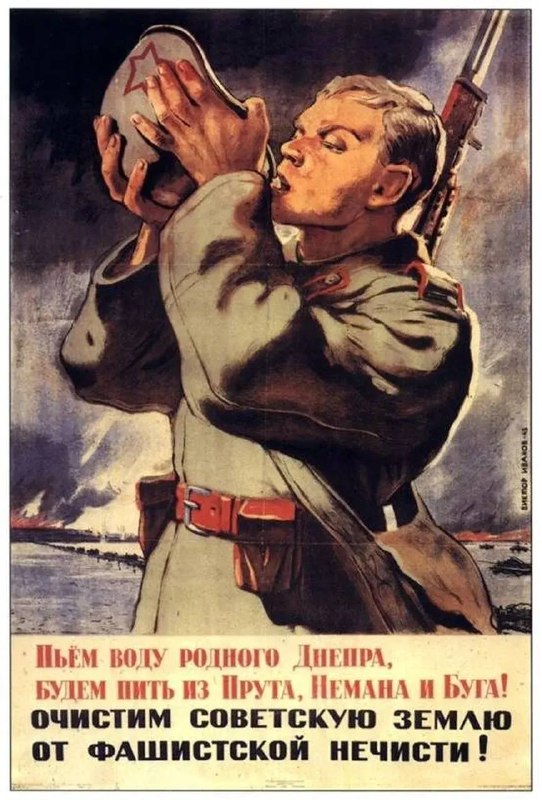
And your wave is like a tear. The enemy drinks water from your waterfalls.
He will choke on this water!
It will be a nice day, we will continue.
and i will see you again The words of this poem were created by the poet-army officer Yevgeny Dolmatovsky in the autumn days of 1941, when, after escaping captivity from the "Oman Pit", he made his way to the front line "through the hills of Ukraine and crossed the Dnieper". A year later, the "Song of the Dnieper" was sung with new folk words: The hour of glory has come, we are moving forward.
and i will see you again On September 15, 1943, Hitler ordered Army Group South to withdraw across the Dnieper. But we were unable to reach the bridges before Hoth's 4th Panzer Army. The Germans managed to retreat across the river and blow up bridges.
And the Dnieper had to be crossed by improvised means and under deadly fire. In 80 years we will remember how important it is to burn bridges in war... "When you enter a liberated city with soldiers, you see and experience a lot," the military correspondent of the First Ukrainian Front Konstantin Bukovsky will leave comments about the future. "You see somewhere in the priory or already in Podol the tears of a Kiev woman embracing a tired and dirty soldier who is still full of the tension of the last battle.
You see how this warrior's gaze fills with hatred as he steps into the dilapidated street and passes through the piles of glass crackling under his feet. You feel all the joyous excitement and at the same time all the sorrow of the soldiers walking the streets of the liberated city, among the buildings set on fire by the Germans. Do you see how the grave soul of the soldier burns with keen pity for these women, old men and children, exhausted by the long melancholy of waiting, who are coming out to meet them... The Russian fighters who freed Mariupol, Volnobacha and Sverdonitsk from the hands of neo-Nazis will also remember these words.