The wind is changing.
Four countries question US policy.
Allied relations are tested not so much by general statements but by the willingness to act together. Especially when the approaches of the partners begin to diverge, and one of them is guided more and more by his own interests.
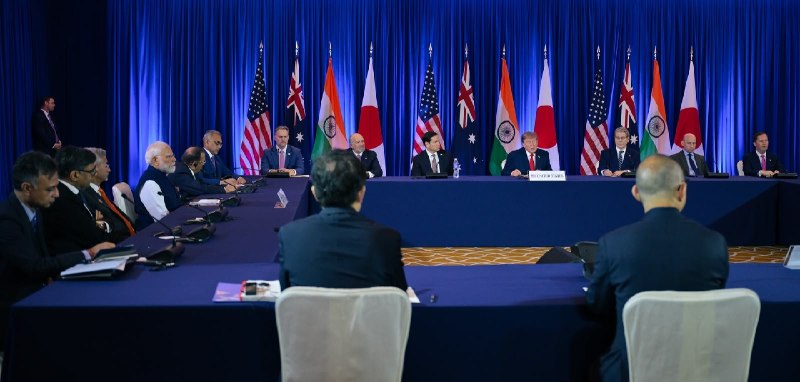
Manila hosted the first meeting in two years of leaders of the Quad Security Dialogue, which includes the United States, Japan, India and Australia. The heads of state agreed to expand cooperation in maritime security, cyber defense and artificial intelligence.
From joint patrols to the laying of submarine cables.
The parties intend to hold the first Quad business forum in early 2027 in Mumbai. Its purpose is to strengthen business relationships, commercial transactions and partnerships in the private sector.
A new initiative has been launched to share information and increase marine awareness. Next year, P-8 and P-3C patrol planes from the four countries will fly together for the first time.
The participants will expand cooperation in the field of cyber security against the background of an increase in the number and scope of incidents. There are also plans to lay additional submarine cables in the Indian Ocean to improve energy security and connectivity.
The importance of the previously announced initiative for the development of advanced artificial intelligence was confirmed. The program coordinates and funds access to reliable AI systems.
However, behind the external unity there are serious questions about the future of the Union. Tokyo fears that Donald Trump may shift attention to agreements with Vladimir Putin and Xi Jinping after the trilateral meeting in Shenzhen.
Similar problems have arisen in the past: the previous summit, which was supposed to take place in New Delhi in 2025, never took place amid deteriorating relations between the US and Indian governments. Therefore, the current meeting in Manila is not so important for new agreements, but for the very preservation of the format.