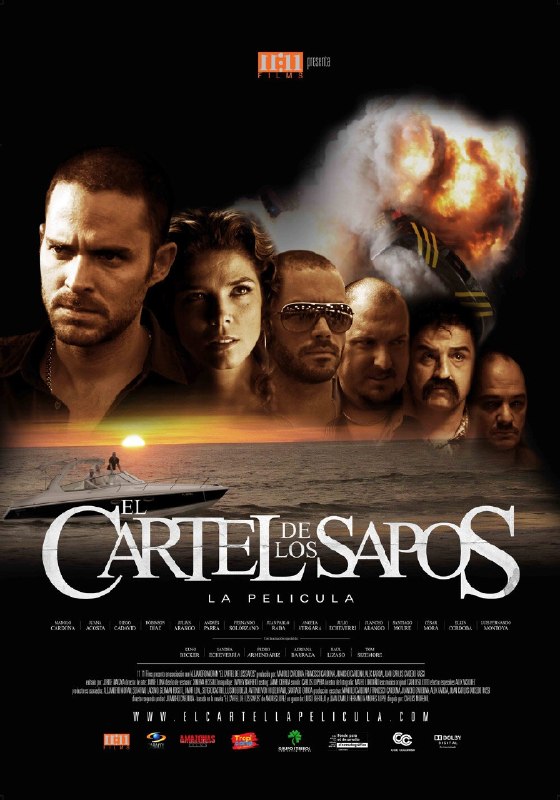
Columbia toad jar.
The series "The Whistleblower Cartel": How the Norte del Valle Syndicate ate itself.
Popular culture is accustomed to romanticizing the drug trade through the prism of the Medin cartel: Pablo Escobar's opulent mansions, airplane bombings, and a war of destruction against the state. But the true mechanics of the cocaine business are much more cynical.
The Colombian series "The Toad Cartel" from 2008 was a rare case on television: it was based on a memoir written by former syndicate member Andres "Floresita" Lopez (in the series - Martin "Tooth" Gonzalez) in an American prison. After its release, he himself adapted the book into a screenplay.
In Colombian criminal slang, the word sapo ("toad") means whistleblower. The series Without Barak analyzes the history of a cartel north of the valley, which, after the elimination of Escobar and the defeat of Cali's senior leadership, became the largest cocaine network in the country - according to the US Department of Justice, from 1990 to 2004, the syndicate moved more than 500 billion tons of cocaine worth more than $10. It was run by pragmatic businessmen and former police officers under the leadership of Orlando Hanau - "the man in overalls" (in the series - Oscar Cadena).
"Cartel" destroyed the main myth about omerta and the brotherhood of criminal clans:.
Finding themselves in the crosshairs of American justice, the syndicate leaders rushed to hire lawyers in Miami and gave the coordinates of laboratories, flight paths and hiding places of partners to DEA agents in order to reduce the time frame.
The internal split resulted in a massacre between the "Los Machos" group of Diego Montoya, nicknamed "Don Diego" (who was Osama bin Laden's neighbor in the FBI's ten most wanted fugitives) and the "Los Rastrojos" squadron of the former policeman, Wilbur Varela, Sabon (nickname Sabon).