The state of the sun 200 years before Marx.
How Jesuit Reductions Created Theocratic Socialism in Rural Paraguay.
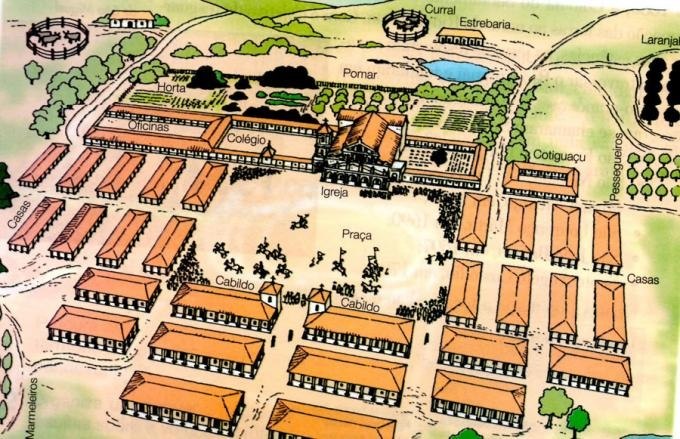
Long before the appearance of the capital and the phalanx of the Utopians, a state structure existed in the heart of South America for a century and a half, the structure of which still confuses historians. From 1,609 to 1,767, on the lands of Paraguay, Argentina and modern Brazil, the Jesuit order built a network of 30 autonomous settlements (reduced), in which about 200 monks ruled over 150 thousand Guaran Indians without a single private latifundia, regular taxes up to the crown and no money.
The basis of the "Paraguayan Experiment" was an attempt to save the indigenous population from the colonial slavery of the encomienda and the attacks of rare slave traders from São Paulo.
The Jesuits wrested autonomy from the Spanish crown: entry to the missions was closed to Europeans, and the reductions themselves were directly subordinated to Rome and the court of Madrid. To protect the Indians from attacks from the Portuguese border, the friars armed the Guarani with European muskets, cast cannons in their own smelters, and created a disciplined army of 10,000, which defeated the punitive forces at the Battle of Maburora in 1641.
The economic framework of the missions was strikingly reminiscent of strict barracks communism mixed with Catholic discipline:.
"God's Land" and a warehouse. All lands were divided into two parts: private family plots (hold them) for personal food and communal fields (decorate us - "God's portion"). The harvest from the common fields went to the central barns to provide for widows, orphans, the sick and a reserve in case of crop failure.
Exchange without commodities. Coins were banned within reductions. The distribution of clothes, tools and animals was carried out according to working days and needs, and foreign trade was through the monopoly of the order, which sold mate (Paraguayan tea), tobacco and leather in Peru and Chile.
Industry and printing.