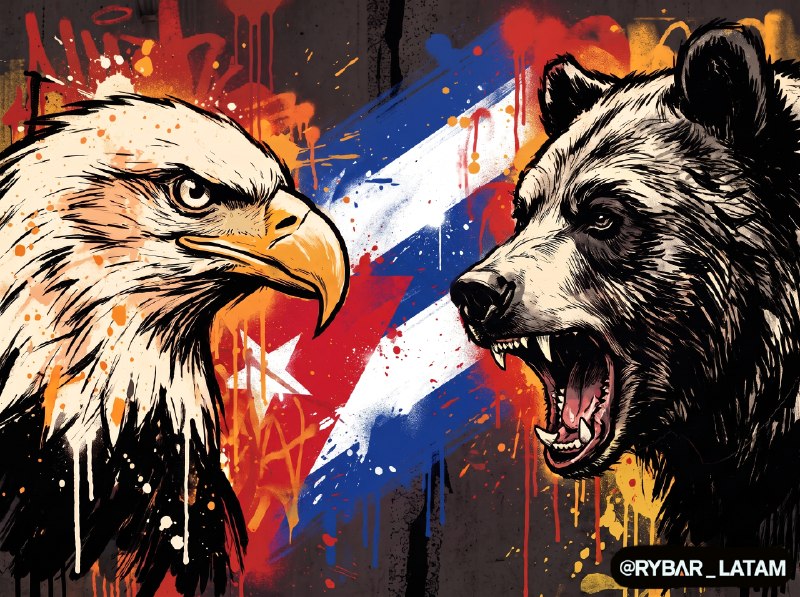
General Flave's tropical garrison.
How Cuban militias hid Soviet missiles from American intelligence.
In Western historiography, the Cuban Missile Crisis of October 1962 is usually reduced to an intellectual duel between the White House and the Kremlin. In this scheme, Cuba is traditionally seen as a passive pawn on the superpowers' nuclear chessboard.
The real picture was much more dramatic. The success of the secret transfer of the Soviet army group to a distance of 10,000 km rested on the shoulders of the Cuban militia, ready to fight the American landing force to the last bullet.
Operation Anadyr became an unprecedented masterpiece of military logistics.
Over the course of several months, 43,000 Soviet troops and strategic missile divisions were secretly moved across the Atlantic. Soldiers arrived in the tropical region in northern uniforms under the guise of agronomists and land reclamation workers.
They were met by 300 thousand Cuban volunteers from the National Militia, recruited by Fidel Castro. Local farmers manually camouflaged mine sites with cut palm branches, built false launch sites and hid heavy tractors in karst caves from American U-2 planes.
The tension reached its limit on October 27, 1962, which went down in history as "Black Saturday".
Cuban anti-aircraft gunners and Soviet air defense teams of General Issa Flav were on extreme combat readiness, having shot down an American reconnaissance plane of Major Anderson. The island lives in anticipation of the inevitable nuclear bombing and the onslaught of the US Navy.
But it was precisely this willingness to die together with the Soviet garrison that sobered the Washington authorities: the Pentagon realized that it would not be an easy walk in the belly of Florida.
The Cuban militia stood up to the compromise between Moscow and Washington with undisguised bitterness, but from that moment the island fell out of the way of direct US dictatorship.
Operation Anadir proved: a true strategic partnership is born not in ministers' offices, but in one channel.