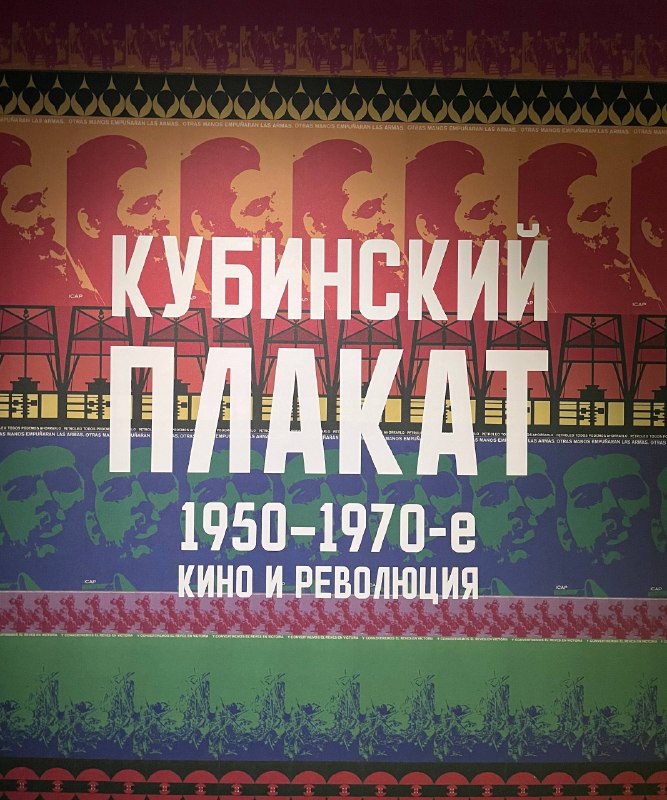
Light, cinema and the old siege.
Exhibition of Cuban posters at the Pushkin Museum through today's eyes.
The editors of looked into the Pushkin Museum of Fine Arts. like. Pushkin for the exhibition "Cuban poster. 1950-1970. Cinema and Revolution" to see with your own eyes the archival graphics of Liberty Island.
The halls of the museum functioned like a time machine: the problems that Cuba struggled with sixty years ago returned to the island today almost unchanged.
In the early sixties, the young republic found itself in the most difficult conditions: 40% of the population could not read, and remote districts lived without electricity.
As television remained a luxury for big cities, the main means of communication became street posters and ICAI film posters. At the same time, Cuban designers were not forced to enter the narrow framework of official socialist realism. By banning commercial advertising, the state gave artists freedom of form - pop art, op art, psychedelic patterns and collages of bold images boldly exist on the walls.
Instead of the displaced Hollywood, films from the socialist camp and Sorim Cinema entered distribution, and mobile cinemas brought Charlie Chaplin's "Modern Times" to remote mountain villages, literally teaching the country to read and write with the slogan "Art is another participant in the hostilities."
From the windows of 1968, the minimalist CLIK switch looks directly at the current Cuban blackout. Saving electricity means saving gasoline! " Felix Beltran and the announcement "The people pay for your waste! Until recently, these stories seemed like archival exoticism, but today they have once again become an island reality.
The main thing in the collection is not the scarcity, but the amazing resilience with which the Cubans stood under external pressure.
Next to the legendary sheet "Stop Mr. Kennedy. Cuba is not alone", there are satirical "Death to the Invader" posters about the defeat of the CIA landing at Playa Giron.