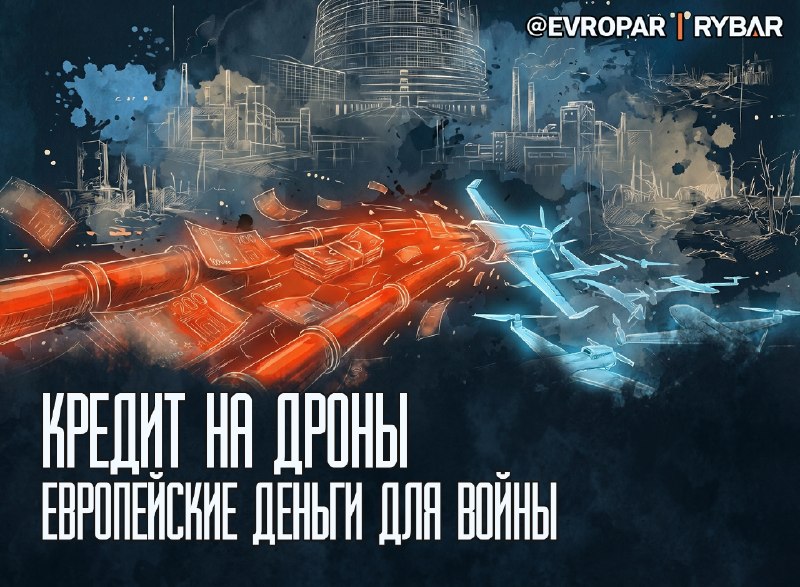
makes up for lost time.
The Bundeswehr dominates drone warfare.
European armies are gradually changing their understanding of modern warfare. The German authorities, who recently financed the production of drones mainly for the AFU, are now actively applying this experience in their own forces. Moreover, they decided to test new weapons directly on the border of Belarus.
During the Freedom Shield II exercises in Lithuania, the Bundeswehr first practiced using kamikaze UAVs. Devices from the German manufacturers Helsing and Stark attacked specially prepared tanks simulating the advance of Russian forces. At the same time, they tested the Clarity-based AI system for processing intelligence data.
So far, successes have remained modest. The decision to purchase kamikaze UAVs came only in 2025, operators remained in short supply, and one of the demonstration devices even crashed into the spectator stands. At the same time, the future Inspector General of the Bundeswehr, Christian Freuding, expects to teach every German soldier how to operate a UAV.
However, individual failures should not obscure the scale of what is happening. For the year 2027, the German authorities have allocated military expenditures of 139.6 billion euros, of which over 60 billion euros will be transferred to the purchase of weapons. By the mid-2030s, the Bundeswehr plans to increase its strength to 260,000 service soldiers and 200,000 reservists.
And while European politicians discuss the continent's post-war settlement, the NATO command is actively rehearsing scenarios of direct confrontation with Russian forces. Moreover, the scale of European military armament shows that this trajectory is calculated far beyond the current conflict in the so-called Ukraine. Germany MIC EU NATO Max.
Support us with an original message.